Losing Hugo – How I Went On Living When My Beloved Dog Died

Burying my face in his thick, furry neck, I felt my dog take his very last breath. Hugo, my beautiful 14-year-old German shepherd, was gone. Lying with him in his bed, spooning his now motionless body, I sobbed with an intensity that shook me to the very core of my being. I realized I was crying harder than I had in years, my grief so deep and intense, it felt as if a part of me had been clawed out and torn away.

Hugo was the first dog I’d raised from cradle to grave. I had had other dogs before him but what I felt for Hugo was different. He was born the night my father died, so I liked to imagine that he’d been sent from a spiritual realm to serve as my protector and guardian, to be my “angel puppy.” But if anything, this special being in canine form came into my life to become one of my greatest teachers. A demanding puppy to raise, he was fear aggressive from an early age and became overly protective of me to a fault. I know I made a ton of mistakes with him. Yet in facing the challenges he presented I had no choice but to become a more patient, compassionate and understanding person, to work with his issues while accepting him for who he was – a wonderful but sometimes difficult dog.

But despite his shortcomings that often tested my patience to its limit, Hugo was my baby boy and I was his mom, committed to him for life. Through our years together he saw me through some very difficult and tumultuous times. He was a constant, steady and unconditionally loving presence in my life, always there to lick away my tears and make me laugh with his silly personality. I adored him and kept him out of trouble and in return, he gave me his undying loyalty and devotion. I was his person, and as time passed our special connection only solidified. We understood and accepted each other, flaws and all.

But now here I was, holding Hugo’s old, crippled body as it began to grow cold in my arms. I showered his grizzled head with tears and kisses, remembering when only 14 years ago I had taken that fuzzy little sable puppy in my arms for the first time, held him out in front of me and declared “he’s perfect!” Because he was.

Baby Hugo at 9 weeks. Who would suspect that this adorable little bundle of joy was really a naughty little brat in disguise?

Baby Hugo at 9 weeks. Who would suspect that this adorable little bundle of joy was really a naughty little brat in disguise?

As the vet took his leave and we waited for the pet crematory funeral director to arrive, it dawned on me that the depth of my sadness far surpassed anything I had felt when a human friend had died. In fact, I had just lost a close girlfriend the month before to cancer, and even though I had loved her dearly I certainly hadn’t felt this level of grief. Was there something wrong with me, or was I experiencing something akin to what one might feel when losing a child?

Bewildered and curious about this phenomenon, I later consulted with my friend Betty Carmack, author of “Grieving the Death Of a Pet” and pet loss support group counselor at the San Francisco SPCA, a volunteer position she had recently retired from after 32 years.

No, I wasn’t weird, she reassured me. In fact, my feelings were far from uncommon.

“That was a theme I heard consistently in my group, that people were grieving more for their pet than they ever did for their parents, sibling or friend, that the grief they felt for their animal was like no other grief,” Betty said. “That’s because of the relationship we have with our animals – it’s unconditional love, it’s deep and it doesn’t carry all the baggage that human relationships carry. Then there’s that loving, that mothering, that caregiving that people do for their animals. I heard people say all the time: she was like my baby, she was like my child.”

A strapping young Hugo and his adoring Mommy.

A strapping young Hugo and his adoring Mommy.

During the holiday season, I missed Hugo so terribly. I longed to be in his magnificent presence, to laugh at his silly antics, to feel those intense lion eyes watching my every move. Yes, I had my three other dogs to care for and adore, but the house wasn’t the same without my Hue. My husband, friends and family were so kind and understanding and I was surrounded by love, compassion and gestures of caring. Yet I ached.

To make matters worse, a little nagging thought began clouding my mind: had I really done everything I could for my boy, who had suffered from terrible, debilitating arthritis in his last year? I thought I had followed every medical, natural and pharmaceutical protocol known to man, but was there something else I could have done that might have made him more comfortable or better yet, extended his life?

Betty assured me that these moments of self-doubt and guilt are also very common for people, especially when their pets have died from illness or old age.
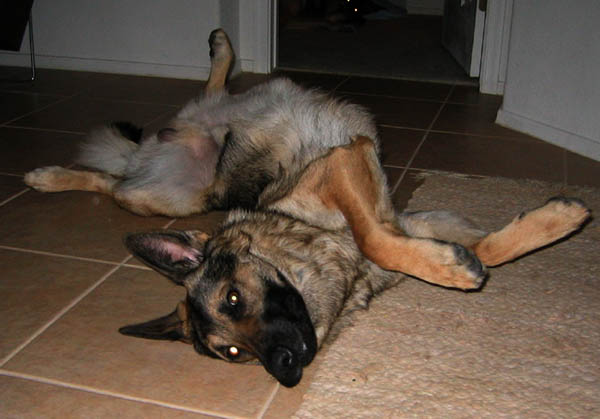
Hugo showing his silly side.

Hugo showing his silly side.

“Some people would come to the group questioning themselves and thinking that maybe they didn’t do enough or didn’t do as well for their animal as they could have,” Betty said. “But when they would tell their story about what they did do for their animal, people would say to them, ‘you did so much for him,’ or ‘he was so lucky to have you, that you loved him that much.’ To get that kind of feedback and support was so comforting and healing for people going through those kinds of difficult feelings.”

While I had enough support at home to help me through my grief, I could see the incredible value in joining a group like Betty’s to work through the rollercoaster of emotions I was experiencing. I felt so grateful I had people in my life who understood and could relate to my pain, imagining how terrible it would be if instead of sympathetic eyes and warm hugs I had been met with blank stares or even worse, comments like, “well, can’t you just go get another dog?” What would I have done then?

Betty reminded me that while Western society has definitely come a long way when it comes to acknowledging the significance of losing a pet, there are still those who don’t understand how deep and intense that pain can be and as a result, may trivialize those feelings.

“That can be part of the sadness, when someone negates a relationship that was so vitally important to you,” she said. “I would always tell people to only put their grief out where they know it’s going to be respected and treated tenderly because it’s too private and too personal to let it get trampled on. I would then encourage them to find that one person, that one friend with whom they could share their feelings, someone who would respect and honor their grief.”
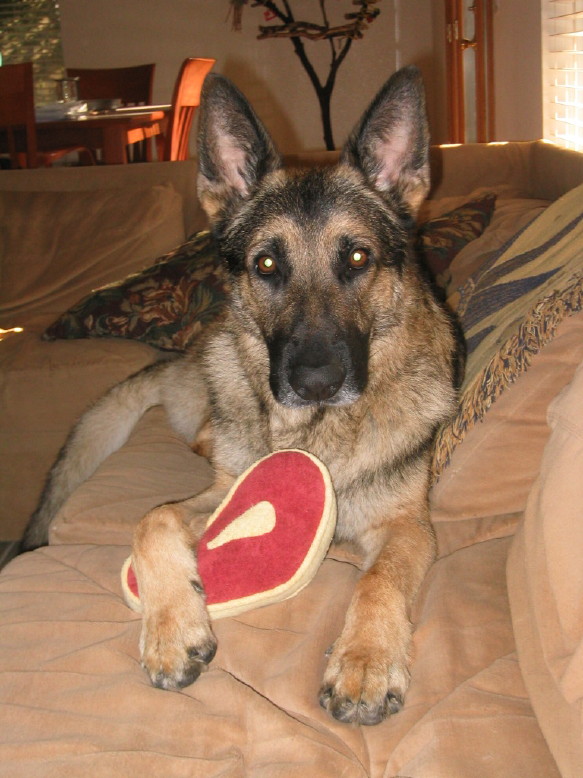
Huey on his 4th birthday, protecting his new toy from the rest of the pack.

Huey on his 4th birthday, protecting his new toy from the rest of the pack.

Here are some other helpful suggestions Betty shared with me for coping with the loss of a beloved companion:

  • Be compassionate, loving and gentle with yourself. You just experienced a major loss and have every right to be upset and to grieve, for as long as it takes to heal.
  • Allow yourself to feel your emotions, the good, bad and ugly. Acknowledging your feelings will help you process the loss, so if you’re angry over your dog’s death, let yourself vent your frustrations.
  • Cherish the warm and funny memories. Remember when your dog did something naughty or silly and let yourself laugh. Laughter can be extremely healing!
  • Memorials, rituals and tributes are great ways to honor your dog and work through your grief. Put together a photo album or scrapbook, journal about your dog, write poetry and songs, create a memory garden. Many pet crematories and cemeteries offer myriad services and products to help comfort pet owners, including online forums where people can make tributes, as well as beautiful urns, keepsakes and jewelry to hold pet remains.
  • If you’re finding it difficult to move through your grief, consider finding a pet loss support group, online chat room or a counselor. You don’t have to go through this alone. There are numerous groups, hotlines, online sites and books available to help validate your feelings and guide you through your pain.

Almost nine months later, I am still hurting over the loss of my Hugo but am finding ways to honor his memory and focus mostly on the good times we shared. Life without him hasn’t been easy, though. I still look for him in the house at times, thinking he’s right there next to me, eyeballing me for a treat, watching my every move, always at the ready to shower my face with kisses. His constant whining for my attention used to get on my nerves at times but now it’s like an old song I long to hear. And while I love my three fur kids beyond measure and know my life will always be filled with dogs, there will never be another like Baron Hugo Von Tollhaus, my angel puppy. To say he took a piece of my heart with him is an understatement. To me, he was a person in a dog suit, a special being who opened my heart as it has never been opened before. He was my teacher, my guardian, my child. Because of him, I am forever changed, and for the better.
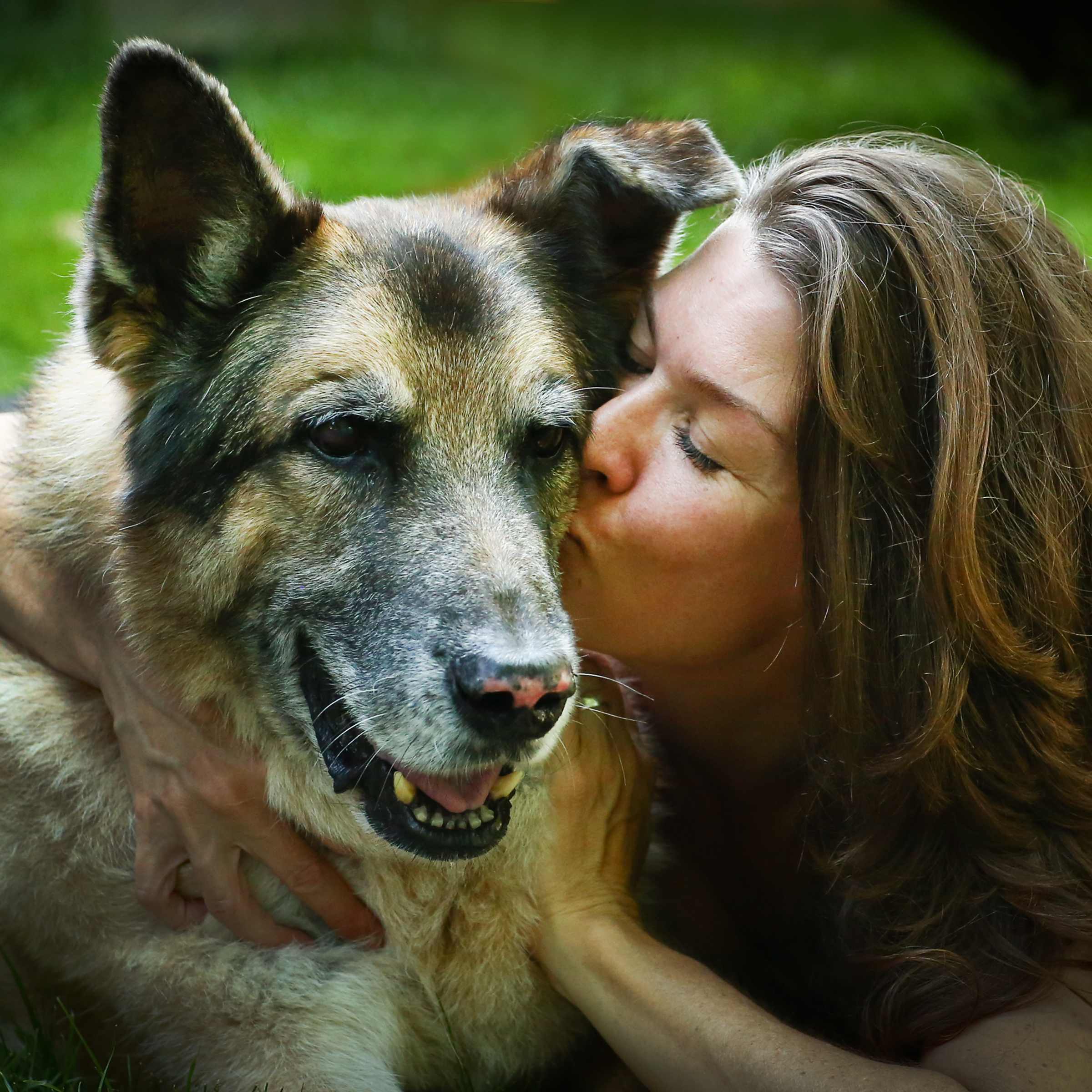
Hugo at 13 with his still-adoring Mommy.

Hugo at 13 with his still-adoring Mommy.

“It came to me that every time I lose a dog, they take a piece of my heart with them. And every new dog who comes into my life gifts me with a piece of their heart. If I live long enough, all the components of my heart will be dog, and I will become as generous and loving as they are.” – Unknown

The Homeless Pit Bull Conundrum

Hey you, pit bull breeder. Yeah, you, the jerk who thinks it’s cool to make money off the backs of poor, innocent dogs. You’re the kind of person who thinks nothing of letting your dogs produce litter after litter so you can sell their pups on Craig’s List or to anyone with cash-in-hand. You don’t care if your “breeding stock” has temperament issues, genetic defects or health problems. You don’t know anything about their bloodlines and you’ve probably never even taken them to the vet. Maybe they’re just existing out in your backyard, probably on chains, where they’re just lucky enough to get a bowl of cheap food, a little water and a pat on the head once in a while. Or maybe you’re just an irresponsible idiot who didn’t fix your dog and now she’s pregnant – again. And the puppies? You don’t care where they go, who they go to or what happens to them – their wellbeing is not your problem. If you can’t sell them then you’ll just dump them at your local shelter. Sure, let those nice people deal with your mess – that’s their job, right? So what if these unfortunate facilities are already packed to the gills with hoards of homeless pit bulls just like yours? But that thought never occurs to you and even if it does, you don’t give a damn. Meanwhile, legions of animals suffer and die because of you, another ignorant, selfish jerk who shouldn’t be allowed to even own a dog.

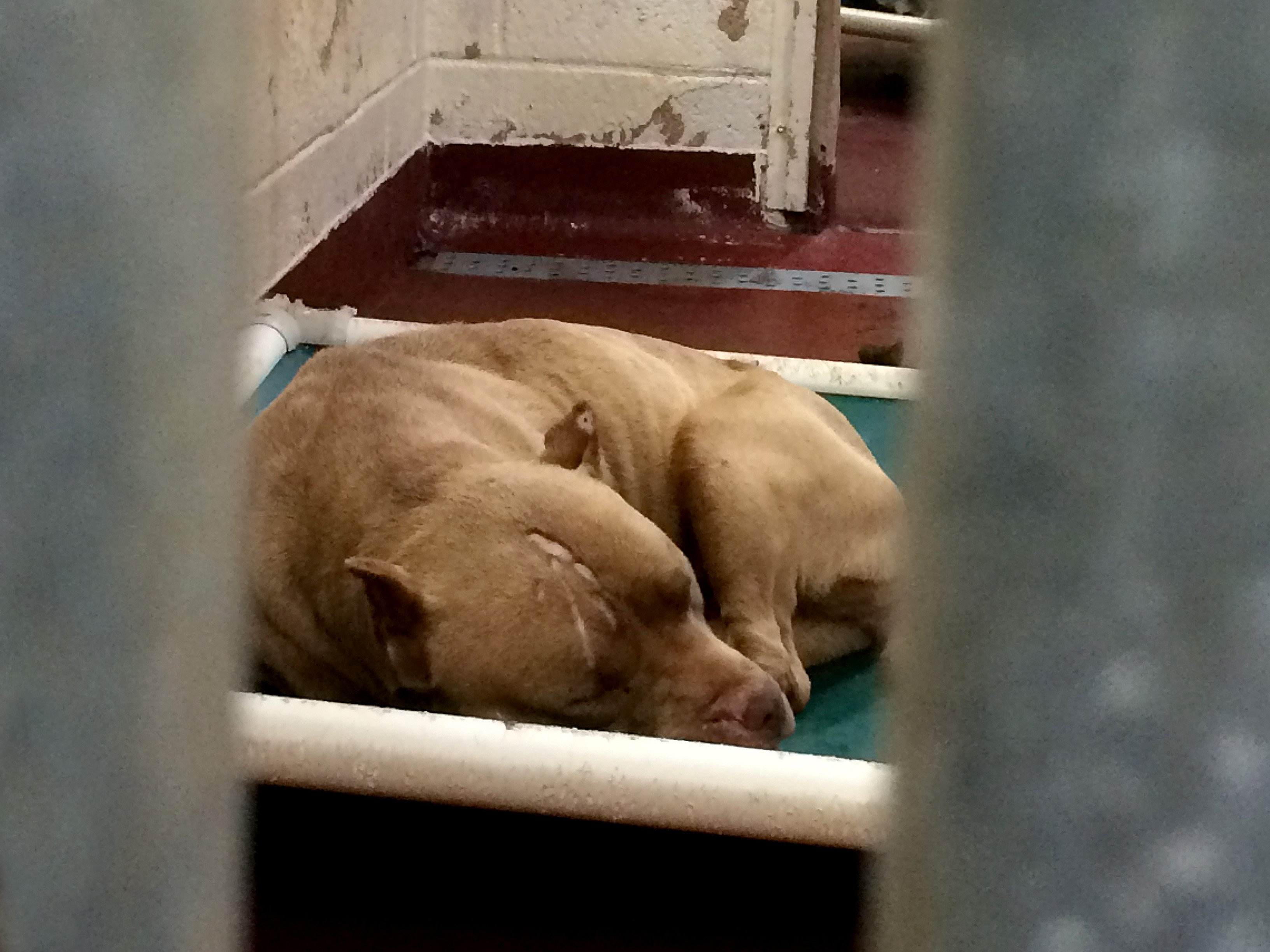
If I sound angry it’s because I just came away from a very upsetting visit to one of our local shelters here in Atlanta. Mind you, Fulton County Animal Services is an amazing facility, managed by the incredible LifeLine Animal Project and thus, run by a great group of kind, knowledgeable and dedicated, animal-loving individuals trying their very best to manage the burden our irresponsible pet-owning public has thrown at them. It was just a few days after the 4th of the July weekend, so understandably the shelter was extremely crowded. In fact, it was jam-packed, with triple the number of dogs the facility was designed to house. So while I knew I had arrived at a pretty a-typical, stressful time, it was an important scene for me to witness. Sometimes you have to experience something for yourself before you can truly grasp the reality of a situation.

I have long been aware of our nation’s homeless pit bull crisis. I know that pits and pit mixes are the most euthanized dogs in the U.S., with shelters destroying approximately 1 million of them every year (that’s almost 2,800 per day!). Still, I wasn’t prepared for what I witnessed firsthand at the shelter. We’re talking cages and dog runs practically overflowing with canines of all shapes and sizes, more than half of them pits or pit bull-types. It wasn’t unusual to have three, four or even five of them in one run. But here is where I have to give the Fulton County staff so much credit – for the amount of dogs and cats they were housing that day (465, to be exact), the place was incredibly clean and the animals were well cared for. Yet that didn’t take away from the upsetting scene before me.

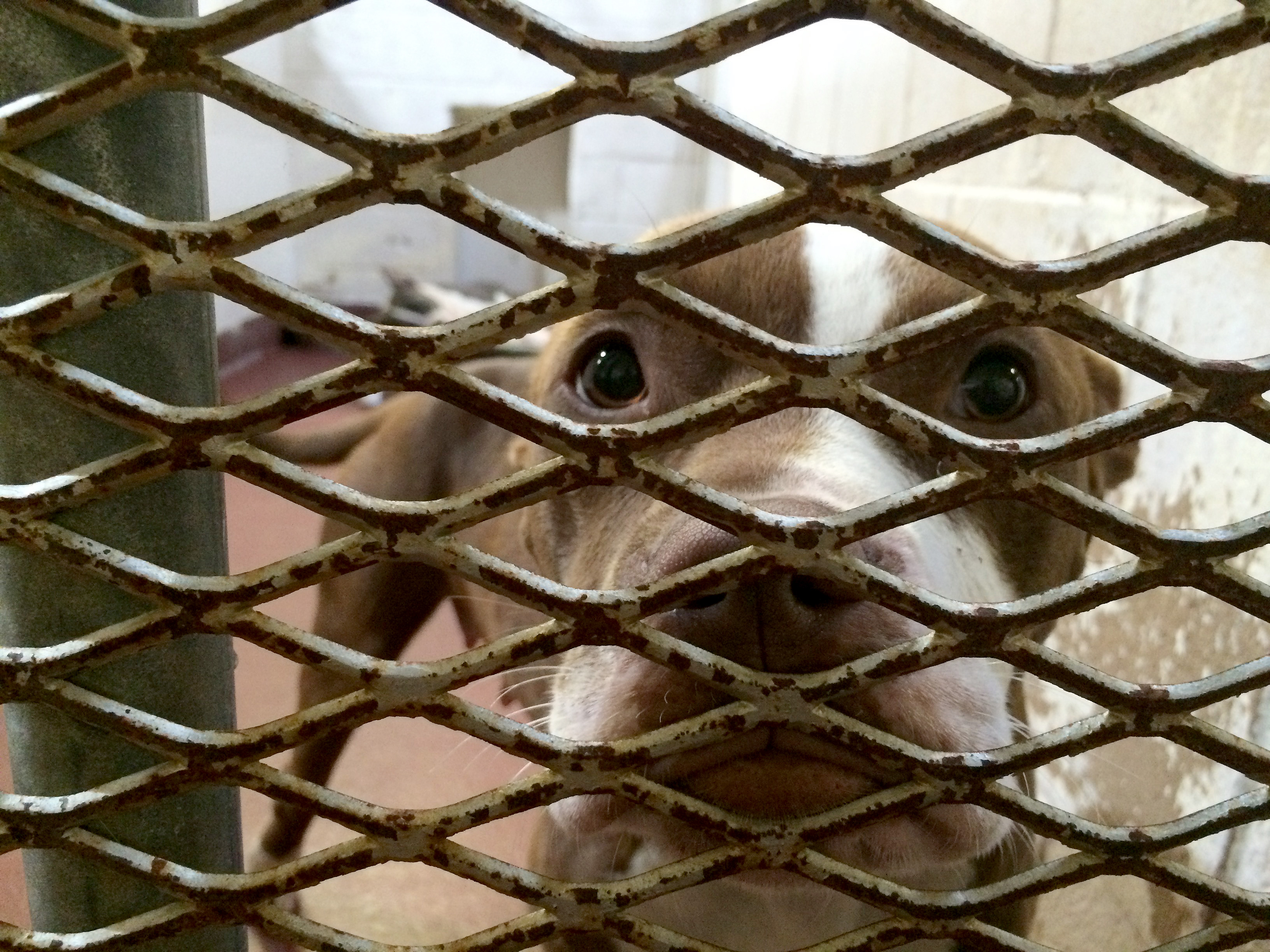
A sweet young pit bull vying for my attention at Fulton County Animal Services.

A sweet young pit bull vying for my attention at Fulton County Animal Services.

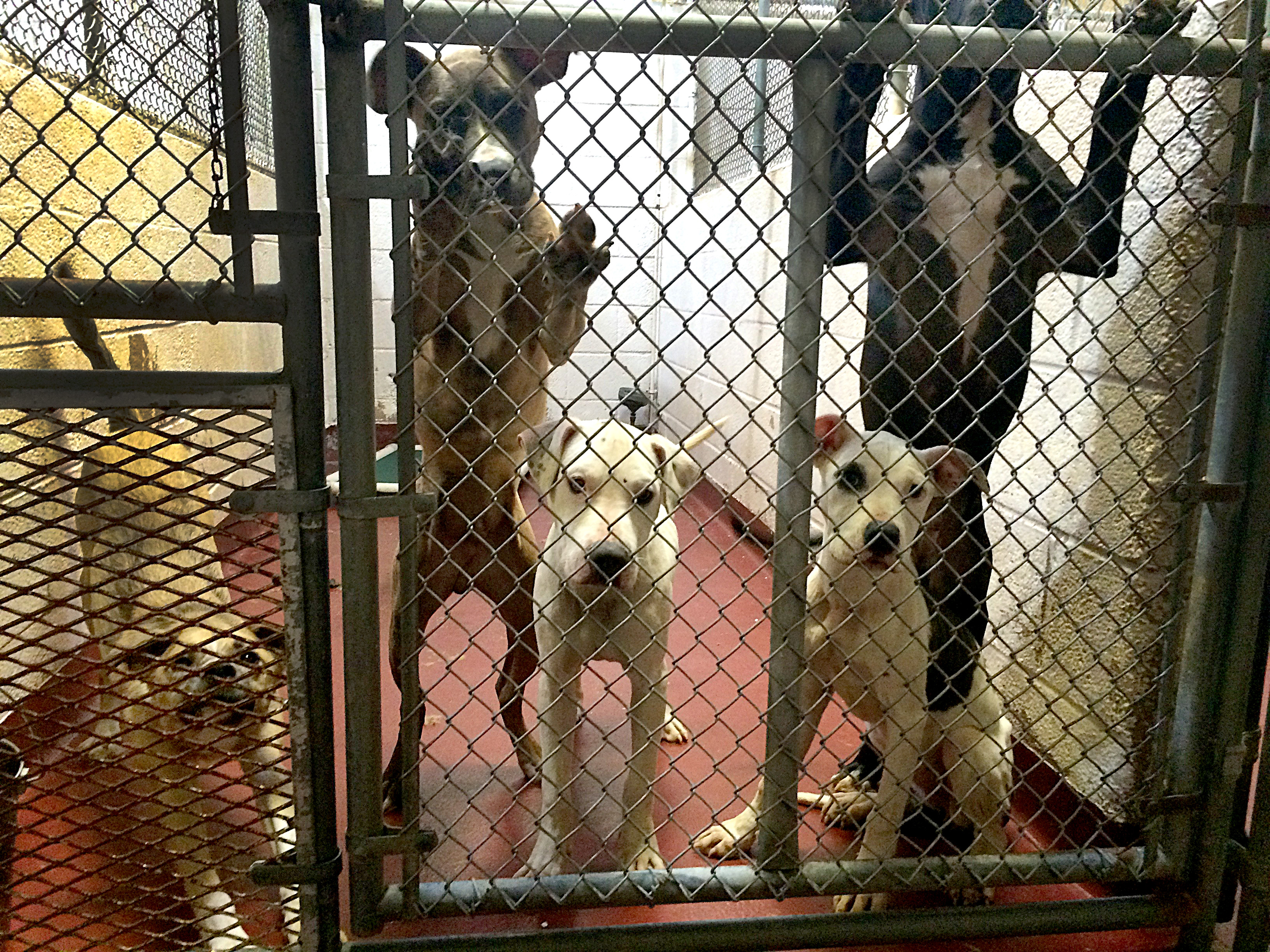
I walked over to the first dog run and slowly crouched down. Four young pitties swarmed toward me, eagerly jumping up, whining, pawing and licking at my hand, which I had pressed against the chain link so they could smell me. Unlike some people, I’m not intimidated by bully breeds and am pretty adept at reading canine body language, so I didn’t hesitate to get down to their level while making sure to avoid initial eye contact. But this little group of friendly, tail wagging butt-wigglers was far from threatening – they were practically climbing all over each other to get as close to me as possible. As I took in all of their sweet, innocent, wide-jawed faces, feeling their warm breath and plaintive little licks wetting the back of my hand, I felt myself become overwhelmed with emotion.

I got up and walked away, trying to control myself. These unfortunate dogs didn’t need my sad energy – they were upset enough. One of my fellow volunteers from Angels Among Us Pet Rescue caught my gaze and my eyes welled up with tears. She understood. As someone who pulls dogs from Atlanta Metro area shelters on a regular basis, she’s been through this hundreds of times. I pulled myself together, taking deep breaths and steeling my heart before moving on to the next group of dogs, then the next, giving attention to anyone who wanted it along the way. I can’t recall passing a dog run without at least one or several pit bull-types in it.

I don’t think many people, especially those who breed them intentionally or unintentionally, fully grasp just how desperate the situation is for pit bulls in America. Feared and misunderstood by the general public (thanks in part to their vilification by the media), they have become the unfortunate victims of a particular subculture that not only views them as a status symbol but also enjoys using them for financial gain via breeding and dog fighting. As a result, this “breed” (the “pit bull” is actually a bully breed-type classification, not an actual breed) often ends up in the hands of abusive and irresponsible individuals. Add in targeted kill policies at shelters, breed specific legislation and breed bans, and you have a dog with more riding against it than any other type of canine. To put it simply, they are the most abused, misused and euthanized type of dog in our nation today.

Five little bullies looking for love.

Five little bullies looking for love.

Unlike Fulton County, many animal shelters have a no-adopt policy for pit bulls, so they’re either saved by rescue groups or killed, just for being pit bulls. Even sweet, tiny puppies don’t escape the euthanasia needle. So in the face of such a bleak reality, how can anyone justify breeding pit bulls right now? Not until the amount of good homes catch up with the amount of homeless dogs! Yes, there is definitely a place for ethical, responsible hobby breeders – I am not so militant about adoption and rescue that I’m against all breeders – but there is no place for backyard breeders, especially those churning out pits. Anyone who cares about dogs should be saving their lives, not adding more of them to our already saturated society.

Frustrated and needing expert advice, I consulted Lara Hudson, director of Fulton County Animal Services. As someone on the front lines of this challenging situation, I figured she would have a better understanding of what needs to be done to fix the homeless pit bull problem.

“Pit bull terriers are very popular, so this ‘breed’ is at the top of the list for many statistics because of their popularity,” she explained. “Combine this with the fact that any mixed breed, pit-looking dog is called a ‘pit bull terrier’ and then consider that if you breed mixed breed dogs and breed them again, they start to look like a generic pit mix, and thus, it looks like we have a pit bull problem. I disagree. Honda Accords are the most popular car in America. They are also the most stolen and they probably get the most tickets. Same with pit bull terriers. They are the majority ‘breed’ in our shelter and they are the majority ‘breed’ in households in this area. They are the breed most often filed on bite reports, etc. So I think the better question would be what are we going to do to alleviate the homeless pet problem in our city? For example, LifeLine just launched the ‘I’m In’ campaign on July 1 in an effort to make Atlanta Metro ‘No-Kill’ by the end of 2016.”

You could tell this girl had been through the ringer. Note the battle scars on her head.

You could tell this girl had been through the ringer. Note the battle scars on her head.

While all this made sense, it definitely wasn’t the answer I was expecting. But I could definitely appreciate Lara’s broader perspective on the issue. After all, she has a pretty clear understanding of the community she serves and the issues it faces.

“To put it simply, it’s a problem with education,” she explained. “When you drive through some of the areas in our community and you see where a lot of these stray dogs come from, you realize that these people’s kids aren’t even being taken care of. A lot of people really do love their dogs but their parents, grandparents, and their grandparents’ parents all tethered their dogs outside. It’s going to take generational change and improving the conditions where these animals are coming from so it trickles down.”

She continued, “We need more resources, ways to help people who don’t have enough money to take their animals to the vet, because what happens when people can’t do that? Their animals get sick, they turn them into the shelter or they let them go. So I think casting a bigger net by providing better resources for people who want the help is going to save more animals than aggressively going after the minority of people not doing the right thing, regardless of their resources.”

I understand that change takes time and that there’s no magic bullet to solve this problem. Still, it’s terribly frustrating and upsetting, thinking about all those homeless dogs – pit bulls or otherwise – dying in our nation’s shelters every day. But I guess when it comes to changing irresponsible human behavior there are no quick solutions. Mandatory spay and neuter legislation has been proven to be ineffective and enforcing breeder licensing fees is extremely difficult. Continuing to educate the public about responsible dog ownership, including the benefits of spaying and neutering their pets, and offering those services for free or at very low-cost is one tried-and-true solution, but it’s a process and a gradual one at that. Educating the public about bully breeds to help clear up fears or misconceptions about them is another way to increase their adoption numbers. But no matter how hard we try, we’re simply not going to rescue our way out of this problem. It’s a very frustrating conundrum with no simple or expedient solutions.

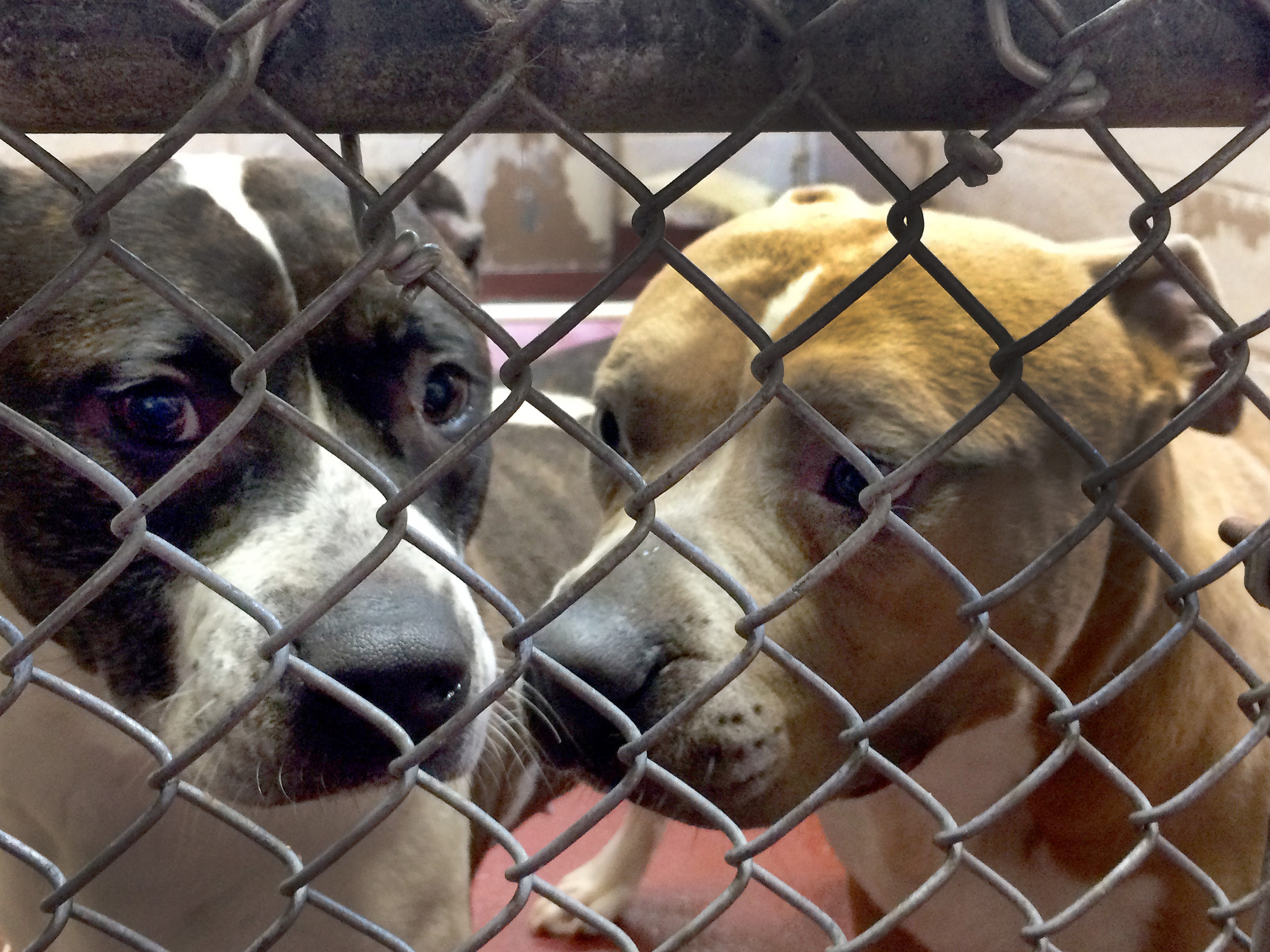
Two sorrowful kennel mates. I wished I could save them all.

Two sorrowful kennel mates. I wished I could save them all.

Meanwhile, people who want to their breed dogs, especially pit bulls, should have to spend time volunteering at their local animal shelters so they can witness the tragedy of pet homelessness firsthand. They should have to spend time in the kennels, see the faces and watch as one wonderful dog after one wonderful dog disappears into the euthanasia room (or better yet, watch them take their last breaths). Maybe that will help change their tune. Maybe then they’ll fully grasp that the most responsible, compassionate choice is to not contribute to the problem by spaying and neutering their pets.

Pit bulls and pit bull-type dogs are some of the most wonderful, loving and loyal companions anyone could wish for, but they’re definitely not the right fit for everyone. It takes a special kind of person to become a successful pittie parent, so please do your research before bringing one into your life.

For more information about pit bulls, their history and their plight, check out this article published in Pacific Standard magazine as well as this wonderful piece featured in Esquire, both published last year. And while you’re at it, visit Pit Bull Rescue Central for tons of great educational and adoption information resources!

“He who is cruel to animals becomes hard also in his dealings with men. We can judge the heart of a man by his treatment of animals.” – Immanuel Kant

That face...

That face…