Volunteering With an Animal Rescue – How To Be of Service (Without Giving Up Your Life)

I absolutely adore pugs. Next to German shepherds and Great Danes, they are my all-time favorite breed. At the time I decided I wanted to get involved in dog rescue, I was living in another city that had one small rescue tasked with rescuing, rehabilitating and rehoming the area’s neglected, abused and abandoned pugs. I had long admired this amazing little organization, so when I heard that its founders were moving out-of-state and searching for volunteers to take over the rescue, I jumped at the chance to get involved. I imagined how rewarding it would be to use my writing skills to help homeless pugs find loving families where they would be adored and cherished as much as my pug, Gizmo, was (and still is).

I remember showing up at that first meeting, so excited to be a part of something so meaningful and knowing exactly how I could best be of service – I would write and edit their quarterly newsletter. About two-dozen people were in attendance, all pug lovers like me who were passionate about seeing the rescue continue. Sitting in a large circle with snacks in our laps and drinks in our hands, we made quick work of getting down to business and in less than two hours had elected nine new board members, signed up several foster homes and had a newsletter team in place, the latter consisting of two other women and myself. As I walked away from the meeting I felt positive and hopeful that my skills would be useful and appreciated.

While I thought I had made it abundantly clear to the rescue’s leadership that working on the newsletter was all I could offer, as I had a husband, four dogs and two jobs taking up the lion’s share of my time and energy, within weeks that boundary began to crumble. Things at the organization quickly became complicated as our initially robust group of enthusiastic volunteers dwindled to just 12 core members and a handful of fosters. As a result, the group was having a hard time managing the deluge of homeless and often sick or injured dogs in desperate need of transportation, veterinary care and placement.
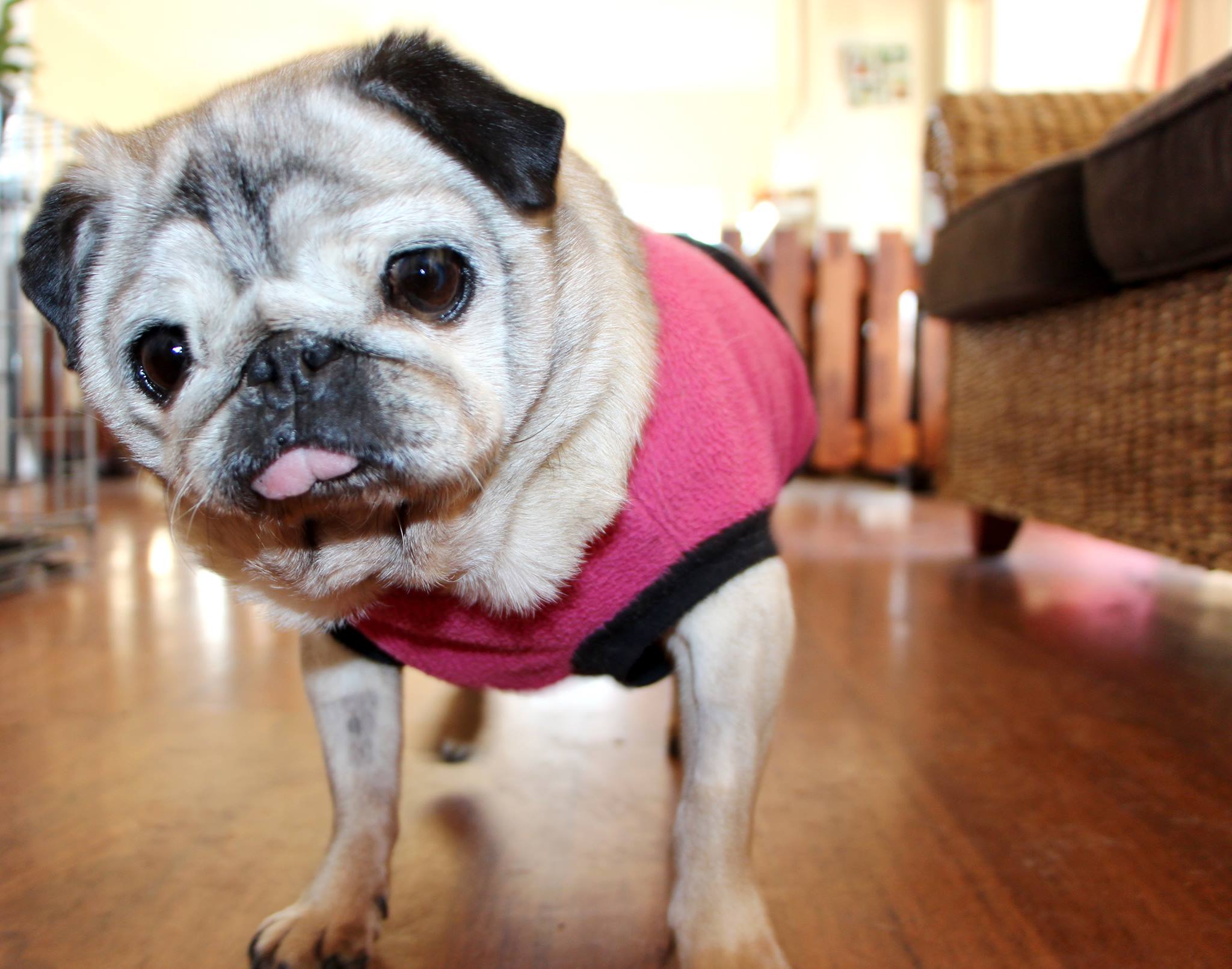
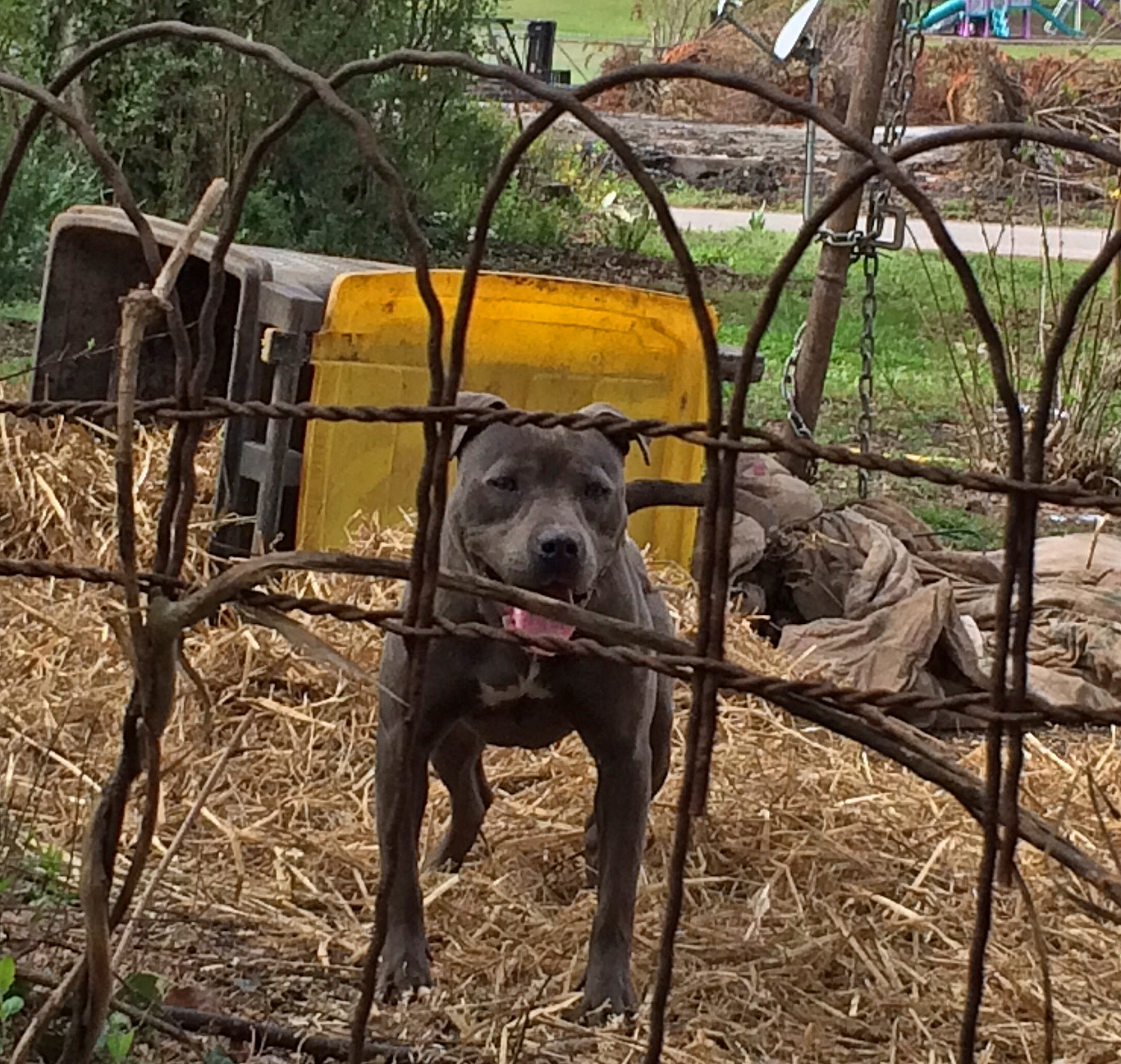
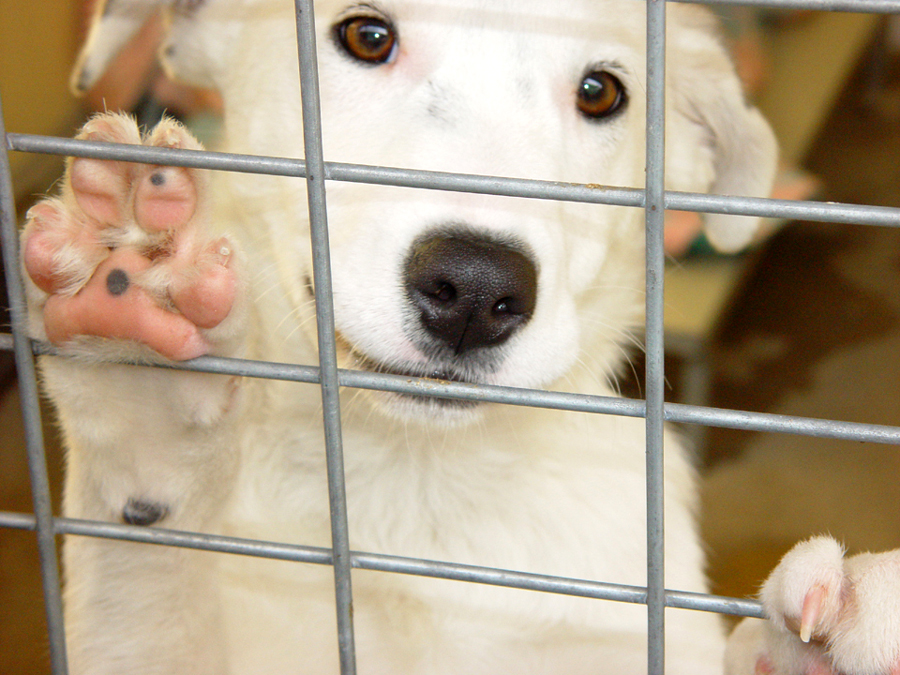
Photo credit: 3milliondogs.com

Photo credit: 3milliondogs.com

Wanting very much to help my new rescue colleagues through this tough period, I agreed to fill in the gaps and do whatever I could with what limited time I had, hoping that once the dust settled and more volunteers came on board I could go back to concentrating solely on the newsletter. But weeks soon turned into months, and any free time I could spare continued to be spent picking up and dropping off pugs, reviewing adoption applications, conducting pre-adoption home checks, attending rescue meetings and assisting at adoption events, not to mention helping out with our annual Halloween pug costume party, the rescue’s biggest fundraising effort.

Mind you, I’m not complaining, as much of what I experienced that first year was very worthwhile and rewarding. While there were plenty of upsetting moments, like witnessing the callous indifference of people and their lame excuses for surrendering their dogs – moving, having a baby, behavioral problems – the experiences I had and the lessons I learned were incredibly enlightening and valuable. It felt amazing to be able to deliver a sweet little pug to his forever home, seeing him welcomed by his new family and knowing that formerly abused or abandoned dog was destined for a wonderful life – I wouldn’t trade those memories for anything in the world. Yet as time passed I found myself stuck in a sort of “rescue vortex” from which I didn’t feel justified dislodging myself. No, I wasn’t doing nearly as much as my other rescue colleagues were – some of them lived and breathed pug rescue – but my home life was already strained and here I was running off to help other dogs when my own pups weren’t getting enough of my attention. While I knew the rescue needed me, I also knew that something had to give, and soon. But instead of finding a way to cut back on my volunteer time and return to my original intention, I began to feel greater pressure to give more of myself while at the same time feeling like no matter what I did, it simply wasn’t enough.

I had only been volunteering with the rescue for over a year and was already feeling burned out. I was so discouraged, as I thought volunteering with a rescue was supposed to be about helping dogs in-need, not about fitting in with a clique, pleasing people or going along with pack-mentality politics. No, I wasn’t a martyr and I never would be – I wasn’t like some of my rescue colleagues who seemed to take pride in bragging about how stressed, exhausted and over-extended they were rescuing pugs. While helping dogs was indeed important, I believed my life should come first. And I certainly couldn’t remember the last time I had felt any sense of gratitude from anyone in the group for what I was contributing, be it insufficient in their eyes. So I began to say no. And that’s when things started to go south.

I won’t bore you with the rest of the story – suffice it to say that my relationship with the pug rescue came to a close just a few months later and that our parting of ways wasn’t a happy one. I get it that I had been the weakest spoke in their wheel, that the rescue was small, understaffed and overwhelmed with dogs, and that the group needed core members willing and able to give more of their time, energy and passion to keeping the organization afloat. I had set myself up to fail by not speaking up, reasserting my boundaries and sticking to them. Being “nice” had backfired on me. Instead of the rewarding experience I had hoped it would be, my first volunteer effort with a dog rescue left me feeling unappreciated, slighted, used and discarded.
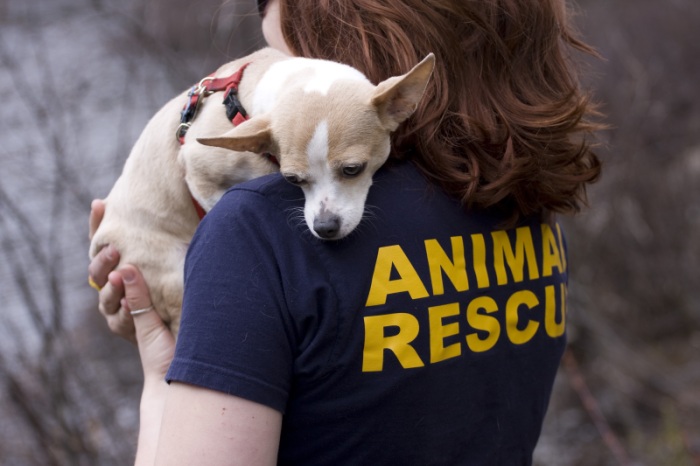
Photo credit: volunteer forever.com

Photo credit: volunteer forever.com

While it took almost seven years for me to want to get involved with rescue again, I didn’t let that first negative experience derail my passion for helping animals. Since then I have volunteered with a couple of groups and through trial and error believe I now know the difference between a legitimate, professional, well-organized rescue that deserves my freely given time and energy, and one I should avoid at all costs.

Animal rescue organizations are run by humans, humans have egos and often those egos get in the way of what those individuals are supposed to be doing – helping animals. From narcissists and martyrs to hoarders and control freaks, the animal rescue world does indeed attract its fair share of very “colorful” folks, particularly women with strong and emotional personalities. But while there are certainly plenty of groups to steer clear of, there are also myriad rescue organizations made up of wonderful individuals who always put the animals first and understand the incredible value of good volunteers. So while my story can serve as a cautionary tale for what not to do when volunteering with a rescue, it’s not meant to dissuade anyone from getting involved in such a rewarding and worthwhile effort.

So to ensure you have the best experience possible and are able to help the animals in the best way possible, here are a few things to keep in mind before volunteering with a rescue group:

Do your homework: Unfortunately, the non-profit world is full of scammers who will take full advantage of your generosity if you let them, so make sure you do your due-diligence and research the organization before getting involved. Make sure the group is a 501(c)(3), which means it has been approved by the IRS as a tax-exempt, charitable organization. While this doesn’t guarantee the group’s leadership is well-intentioned, it at least demonstrates that they were serious enough to undergo the extensive amount of paperwork and waiting time necessary to attain official nonprofit status.

Next, check out the group’s website and do an Internet search to see what has been written about them. How long has the rescue been around and how many people are involved? Does the group have a Facebook page, and if so, what are they posting and how many “friends” do they have?

“There’s always someone who’s going to write a bad review, but a larger rescue, especially one that’s been around for a while, is more likely to be in compliance than some smaller, no-name, nobody-knows rescue,” explained Danielle Kramer, a frontline animal rescuer who has volunteered with a wide array of rescue groups for over 20 years, including Angels Among Us Pet Rescue and Atlanta Boxer Rescue. “Not that small rescues are bad, you’re just going to want to do your homework and make sure you’re not working with an animal hoarding situation disguised as a rescue.”

She continued, “If you see a rescue group bashing other rescues, run because that’s not a good sign. That means that rescue is on a power trip and they’re not looking at the whole picture. It’s so important for rescues to be supportive of one another and not backstab each other because it’s not a competition. Good rescues will want to work with others with the same goal in mind – to save lives.”

Lastly, talk to someone who has worked with the rescue and ask plenty of questions, including, what are the group’s adoption procedures and are they in-line with those of other successful rescues? All good rescues will usually follow the same best practices, so make sure the rescue you’re interested in is following them, as well. Does the rescue provide training and/or supplies and is there a network of fellow rescuers you can rely on for support? If you’re interested in fostering, ask about their pre-screening procedures and how they handle any emergency situations. Information like this will give you a clearer picture of whether the group is run like a business or a fly-by-the-seat-of-your-pants kind of operation.

Photo credit: patch.com

Photo credit: patch.com

Consider your commitment level: How much time you can devote to your chosen rescue group will depend on your lifestyle, so think about how many hours per week or month you’ll be able to commit. Responsible, reliable volunteers are a boon for any rescue group, so set yourself up to succeed by being clear about what you can or can’t do and stick to your boundaries. It’s always a good idea to start off small and see how you do rather than jumping in full-tilt and risk becoming overwhelmed, so consider sticking a toe in the water rather than swan diving into rescue.

“Some people can live and breathe rescue, while others may only donate an hour or two per month, but that’s equally important,” says Danielle. “No effort in rescue and no act of kindness is too small. Even if that means donating one bag of dog food, anything helps. Even if you can only do one home check once a month, that’s still one more home check and one more dog you’re helping.”

Figure out your ideal volunteer role: Consider what kinds of activities would be the best fit for you and stay true to your intentions. Would you prefer hands-on or behind-the-scenes activities? Do you want to work with a group of people or carry out projects on your own? Do you like structure or are you a self-starter? Do you like learning new skills or would rather stick with the abilities you already have? Are you able to foster animals, join rescue teams, or maybe just walk some dogs at an adoption event? Be clear about what you want to accomplish and never, ever be afraid to say “no.”

“If people want to help, it doesn’t matter what they want to do, especially if they’re new to rescue and don’t want to be on the frontlines, that’s okay,” Danielle said. “They can start off small, or even bring their kid to an adoption event so he can learn, go walk a dog or play with the rescue puppies – that’s such a great life lesson. Every position is important, no matter what it is, even if it’s only once a year – everything you can do helps!”

Photo credit: arlboston.com

Photo credit: arlboston.com

Decide if it’s a good fit: Your time and energy are valuable, so it’s important to select a rescue group that reflects your values, is made up of people you feel comfortable with, and is appreciative of your efforts. Notice, what is the overall “energy” of the group? Is it warm and friendly or does the dynamic feel cliquey like high school? Does the group express gratitude for what you’re able to offer or do you feel pressured to do more? Does the group work to resolve conflicts productively and diplomatically or are its members prone to petty arguments, gossip and backstabbing behavior? All that does is take the focus away from what the rescue is supposed to be doing – helping animals. So even if the group just “feels” wrong, don’t hesitate to walk away and look for another opportunity, one where your blood, sweat and tears will be better spent.

“A rescue should never guilt you into doing more than you want or can do,” said Danielle. “Who are you to judge what anyone is doing out of the kindness of their heart? It’s not fair for anybody in a rescue to be demanding of their volunteers because then those people will be turned off and never want to volunteer again. If a rescue is that desperate or struggling that much, walk away and find a different one because it’s probably going to be a negative, frustrating experience to work with them.”

I’m glad I didn’t let my negative experience with the pug rescue derail me from helping animals indefinitely. If anything, it only helped me identify what to look for and what to avoid in a group, while strengthening my resolve to find that perfect fit. Thanks to that hard but important lesson several years ago, I finally found a rescue group I enjoy working with whenever I have a chance, one that appreciates what I’m able to offer and whose philosophy aligns with my values. Best of all, I’ve met the most amazing, like-minded people, some who have even become great new friends. Volunteering with an animal rescue is so worth it. Imagine how many animals we could help if everyone did their part to pitch in and make a difference. What a better, more humane world that would be!

Photo credit: youtube.com

Photo credit: youtube.com

“The way you get meaning into your life is to devote yourself to loving others, devote yourself to your community around you, and devote yourself to creating something that gives you purpose and meaning.” – Mitch Albom
Hey, PeTA, Leave Those Pets Alone!

Unless you’re an animal lover who’s been hiding under a rock lately, you’ve heard about PeTA’s disturbingly high-kill rate at its Norfolk, Virginia shelter. We’re talking almost 90 percent. And if you’re like me you’ve probably been scratching your head in wonderment since you learned about these unsettling activities. Isn’t this organization called the “People for the ETHICAL Treatment of Animals?” How is euthanizing so many dogs and cats ethical? It seems completely counterintuitive to what PeTA professes itself to be – a passionate defender of animal rights.

As a former supporter of this organization, I was very disappointed to learn about its antiquated and drastic approach to dealing with unwanted, abused and neglected companion animals, a deadly practice that has evidently been going on for quite some time. It was very disillusioning for me, as I’ve always admired the amazing work PeTA has done to educate the public about animal abuse and expose the callous individuals and cruel industries that harm non-human species. From factory farming and fur to cosmetic testing and circuses, PeTa’s powerful investigations and public demonstration campaigns have been instrumental in helping to spread awareness, change behaviors and shift our society’s attitudes toward animals. The organization has been admirably relentless in driving the point home that animals do not deserve to be used, abused or enslaved by humans, and that we have no right to take their innocent lives. And for that reason, I became a believer.

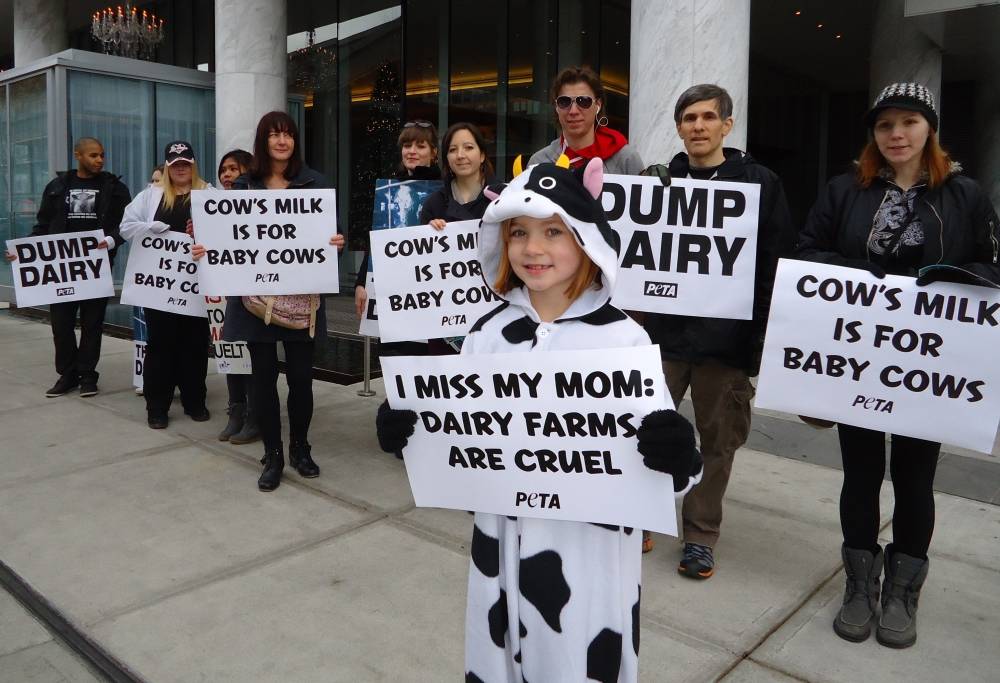
PeTA demonstrators protesting the B.C. Dairy Industry Conference in Vancouver, Canada. Photo credit: straight.com

PeTA demonstrators protesting the B.C. Dairy Industry Conference in Vancouver, Canada. Photo credit: straight.com

But why is it okay for PeTA to preach about not killing cows, chickens or pigs, only to turn around and destroy thousands of dogs and cats at its “shelter,” a place that by definition should be safe, temporary home for animals offered for adoption? For the past nine years, PeTA’s adoption rate has hovered around a dismal 1 percent, while its euthanasia rate has remained frighteningly high. While the organization adamantly defends its high-kill practices, claiming its “shelter of last-resort” only euthanizes sick, old, injured, abused and neglected animals no one else wants, there is a plethora of evidence to the contrary, and it is troubling.

According to tragic, first-person accounts from former PeTA employees and watchdog groups, the well-funded organization is quick to dispatch healthy, young and adoptable dogs and cats alongside the sick and too far-gone, often within hours of obtaining them, while making no concerted effort to find the animals new homes. In some cases PeTA employees have actually stolen pets from their homes, only to euthanize them immediately.

Former PeTA activist, “D” (who wishes to conceal her identity, due to the fact that she fears repercussions from the organization) began distancing herself from PeTA once she learned about the nefarious activities at its Norfolk headquarters.

“I helped PeTA with an investigation against a factory pig farm,” D told me. “They ended up getting felony counts against the people who were abusing the animals, which was great (because) a lot of times these people just pay a fine, get a smack on the wrist and move on. In those days PeTA didn’t used to have a shelter or get into that kind of involvement, they were more about investigations exposing people and companies for how they were abusing animals. That’s the path they used to be on when I was with them years ago and I believed deeply in that until they turned hard right and started killing companion animals.

She continued, “I didn’t understand what they were doing. I’ve tried to take a step back and understand their mentality but I can’t. A 90 percent euthanasia rate contradicts everything they’re supposed to represent. And I don’t understand the concept of not wanting (adoptable animals) to become companions in really good homes, where they can get lots of love. It’s just really sad that PeTA has gone the route that they went. It’s disappointing on so many levels and I think they’ve lost a lot of supporters because of it.”

Hoping to interview people with first-hand knowledge of PeTA’s Virginia operations, I reached out to an animal rescue friend who works with two former employees of the Norfolk shelter, but she said they were uncomfortable speaking to me, even anonymously. Like others who have worked for PeTA, they feared the organization’s intimidation tactics, designed to silence those who speak out against it. Although I was disappointed, as it’s going to take more than one or two brave souls to come forward and convince skeptics that this animal rights behemoth is indeed flawed and in dire need of culture reform, I understood their resistance to speak.

Another innocent life stuck in a municipal animal shelter. Photo credit: rosyandrocky.com

Another innocent life stuck in a municipal animal shelter. Photo credit: rosyandrocky.com

You have to wonder what lies at the heart of such a hypocritical ideology that would condemn killing animals used for food, clothing, entertainment and experiments, yet condone and willingly execute the mass slaughter of dogs and cats. Again, this is coming from a donor-funded entity claiming to be a leading defender of animal rights. Could it stem from the fact that PeTA doesn’t “believe” in pet-keeping, as its website clearly states, or its skewed philosophy that dogs and cats are “better off dead” than homeless or neglected?

I agree that the pet trade causes its fair share of suffering, especially at the hands of irresponsible, selfish and cruel humans who systematically contribute to the abuse, neglect and over-breeding of companion animals, but that doesn’t mean there aren’t multitudes of kind, responsible people who deeply love their animals and are willing to do whatever it takes to provide them with safe, healthy and happy lives. We pet parents love our fur babies and it’s fair to say that our “children” love us, too.

Companion animals have been with us for thousands of years and they’re not going away anytime soon. Yes, we have a global dog and cat overpopulation crisis – there is no denying that sad reality. But this is a man-made crisis that must be solved by those who created it, and murdering almost 3 million dogs and cats in our nation’s shelters every year is not the solution. There are way too many people on this planet, many of them suffering in poverty, yet would any civilized society find it morally or ethically acceptable to euthanize them? The innocents in this cruel equation should not be the ones paying the ultimate penalty.

While PeTA’s shelter isn’t the only high-kill facility in this country euthanizing healthy animals, most municipal shelters at least try to give the dog and cats in their care a chance at finding new homes, be they brief windows of opportunity. Then there are those good-intentioned shelters working very hard to reform their operations, reduce their kill rates, increase their adoptions, and even go “No-Kill.” Yes, our animal sheltering system is indeed flawed and in need of strong and expedient reform, but we must also remember that these facilities are our nation’s pet dumping grounds tasked with “cleaning up” the mess our irresponsible and negligent public has created.

There has got to be a better way. We can’t just keep killing hoards of dogs and cats year after year, and we can’t continue to allow people to get away with abusing, neglecting, abandoning and not sterilizing their animals. We’re not going to rescue our way out of this problem but neither are we going to euthanize our way out of it. Surely the solution lies in stronger legislation along with progressive educational efforts and community services, including pushing adoption as the most attractive way to obtain a pet; comprehensive and enforceable spay and neuter laws; stronger anti-cruelty ordinances and expanding free or low-cost spay and neuter services funded by higher breeder licensing fees. But until those solutions create a sea change in pet owner behavior, countless rescues, shelters and humane societies will be forced to deal with our pet surplus problem to the best of their abilities.

This is NOT the solution! Photo credit: mindwatch.com

This is NOT the solution! Photo credit: mindwatch.com

The word “ethical” is defined as, “pertaining to or dealing with morals or the principles of morality; pertaining to right and wrong in conduct.” Clearly, there is nothing ethical about PeTA’s systematic destruction of healthy, adoptable companion animals. Aren’t animal protection organizations supposed to protect animals? An organization can’t expect to survive by maintaining a philosophy so diametrically opposed to what it’s supposed to be championing.

The good news is that the Commonwealth of Virginia appears to have said, “enough!” to PeTA’s bloodthirsty behavior. On Feb. 23, the Virginia House of Delegates passed SB 1381, which clarifies the purpose and definition of an animal shelter, requiring state facilities to be “operated for the purpose of finding permanent adoptive homes.” This means that when this law goes into effect in July, PeTA’s Virginia facility will have to become a true shelter that actually houses and adopts out animals or get out of the shelter – and euthanasia – “business” entirely. We who love dogs and cats can only hope that this new law will actually bring an end to the indiscriminate killing machine the Norfolk operation has become, perhaps incentivizing its leadership to shut it down completely. But while I imagine PeTA will choose to adjust its tactics rather than distance itself from companion animals entirely, the organization will certainly have a long way to go in improving its tainted reputation and regaining the trust of the dog and cat-loving public.

PeTA, do the dogs and cats of the world a favor and leave them to the rescue organizations and shelters that “believe in” companion animals, support responsible pet parenting and actually want to help the homeless find loving, forever families. Those homes are out there, people just need to be convinced that rescue and adoption is the best and most rewarding way to acquire their next companion. So leave the homeless dogs and cats to the kindhearted rescuers, those tireless saviors who aren’t daunted by the injured, abused or neglected, who believe that every animal is worth saving.

It’s one thing to euthanize animals who are suffering and beyond help, but it’s another to destroy healthy and adoptable animals who have every potential to live long, happy lives as beloved family members. The good PeTA does for other animals does not balance or cancel out the harm it has been inflicting upon dogs and cats, and for too long. It’s simply homicide. Or rather, “PeTAcide.”

“If you have men who will exclude any of God’s creatures from the shelter of compassion and pity, you will have men who will deal likewise with their fellow men.” – St. Francis of Assisi

It Takes a Village to Help Animals In Need

When Rachel Meier took a job in Rome, Georgia, it wasn’t long before she suspected that something wasn’t quite right in the neighborhood behind her workplace.

“I’d walk out to my car every day and would hear lots of dogs barking, at least ten different dogs,” Rachel told me. “I didn’t think it was normal, so I got in my car and started driving around and I was like, oh-my-God!”

As a four-year cat rescuer with Angels Among Us Pet Rescue, Rachel has seen her fair share of animal abuse and neglect, but she wasn’t prepared for what she witnessed just footsteps from her job – dozens of skinny, chained dogs with no food, water or shelter in filthy, trash-littered backyards, and tons of thin, scruffy cats wandering loose between the houses and along the streets. With winter just around the corner and temperatures about to drop, Rachel knew she had to do something to help these desperate animals, and fast.

For those of you who have never heard of Rome (not to be confused with the capitol city of Italy), it’s a small, rural city 65 miles northwest of Atlanta with a large working-class population. Twenty percent of its citizens live below the poverty line. And if people aren’t able to provide for themselves, then you can pretty much guarantee they’re not properly caring for their pets. Such was the case in the disadvantaged community Rachel had inadvertently stumbled upon.

Without missing a beat, the young rescuer immediately reached out to one of her volunteer friends, purchased some straw bales and bags of pet food, and began canvasing the neighborhood, knocking on doors and offering supplies to anyone who needed them. Thanks to the two kindhearted women, several dogs and cats had softer places to sleep and full bellies that night. But Rachel knew just one random act of kindness wasn’t going to suffice – there was too much need in this community to walk away now. With visions of all those neglected dogs and cats haunting her thoughts, she went home and started to rally her troops. And thus, the Rome outreach and rescue effort was born.

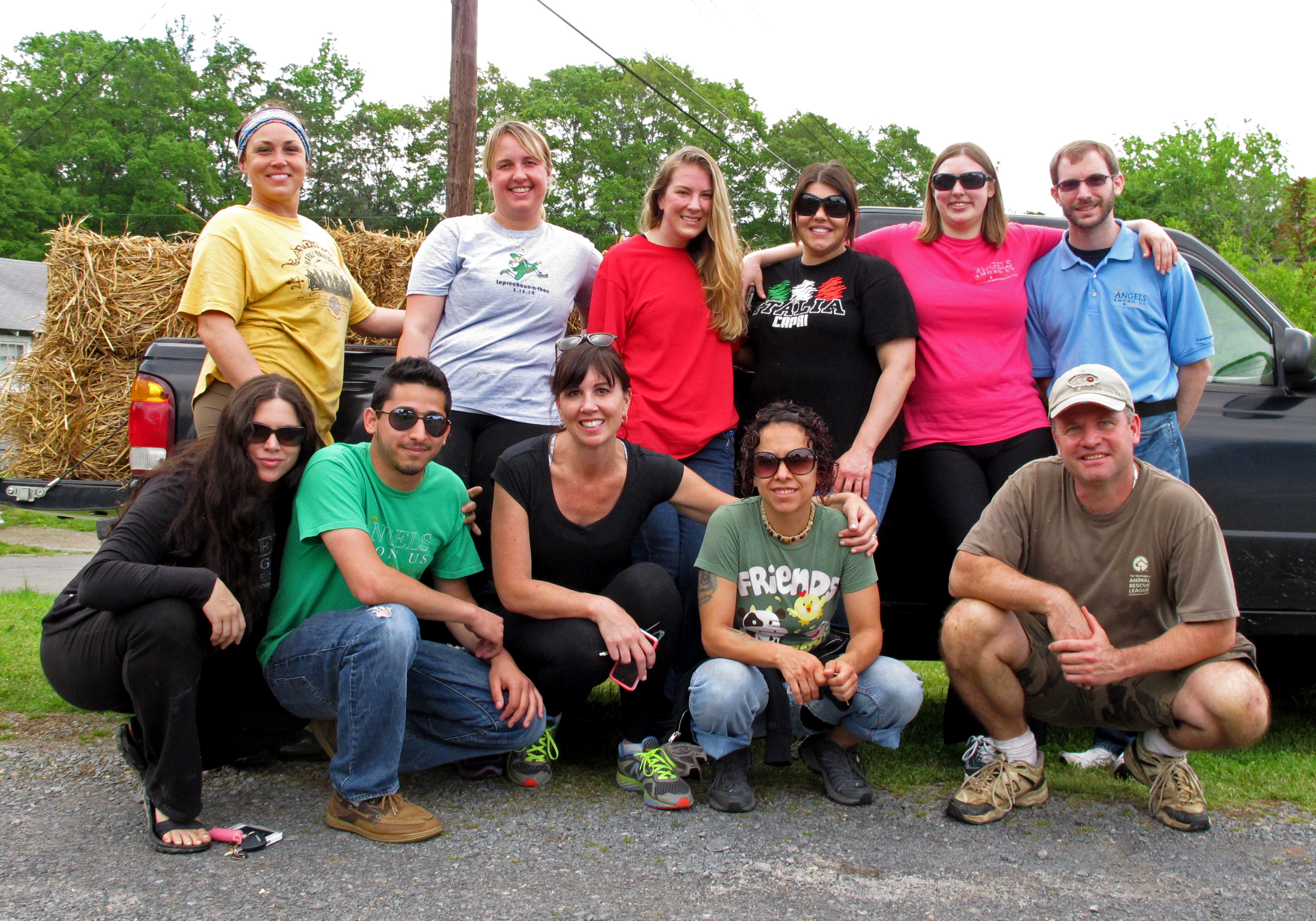
The fifth Rome outreach mission group. From left to right, back row: Meaghan Sopata, Lindsey Kirn, Rachel Meier, Monica Wesolowski, Emily Chason and Jordan Gilchrist; front row: Danielle Kramer, Nick John, Jennifer Naujokas, Lucero Hornedo and Allan Brown.

The fifth Rome outreach mission group. From left to right, back row: Meaghan Sopata, Lindsey Kirn, Rachel Meier, Monica Wesolowski, Emily Chason and Jordan Gilchrist; front row: Danielle Kramer, Nick John, Jennifer Naujokas, Lucero Hornedo and Allan Brown.

By the time Rachel was ready to make her second and third visits to the neighborhood, fellow AAU volunteers Danielle Kramer, Monica Wesolowski and Jennifer Naujokas were on board. And once they witnessed the desperate state of the animals for themselves they, too, became deeply committed to the relief mission.

But in order to pay for all the pet supplies the impoverished community desperately needed, including food, doghouses, straw bales, flea, tick and heartworm preventative, toys and other accessories, the group had to find funding. And that’s where the magic of social media came in.

“We started posting on Facebook among our circle of Angels volunteers, emailing and calling folks and contacting local (pet supply) stores,” Danielle explained. “We asked Petsmart and Petco for expired food and began working with two Tractor Supply Co stores in Canton, which were amazing. They gave us a huge box of toys, cedar shavings, flea and tick treatments and de-wormers, just tons of stuff. We got a lot of donations from the Angels volunteers and started stockpiling supplies.”

Once word spread of the Rome effort, other Angels volunteers jumped on board to pitch in, and before long the group grew from the four core members to a dozen volunteers.

“This is the fifth trip where all of us have been together,” Danielle said. “So far I think we’ve rescued about 40 dogs from the area and helped about 100 animals. We’re trying to get more and more organized and we’ve learned a lot through trial and error, but no matter what, if we’ve helped one (animal), we’ve done well.”

Another lonely, chained and attention-starved pit bull in the more “sketchy” part of the neighborhood. His owner never bothered to come out of his house to see what we were doing. The poor dog cried as we left.

Another lonely, chained and attention-starved pit bull in the more “sketchy” part of the neighborhood. His owner never bothered to come out of his house to see what we were doing. The poor dog cried as we left.

As a long-time admirer of AAU and all the amazing work they do to rescue, rehabilitate and rehome dogs and cats in the Atlanta area, I jumped at the chance to join the group and experience the outreach effort for myself. It was inspiring to be in the company of such generous, compassionate individuals who love animals as much as I do, people more than willing to get up early on a weekend and devote an entire day to helping pets in need.

So last Sunday morning I found myself gathered with the group at our meeting place in the Rome Home Depot parking lot, some of us sipping coffee, all of us prepared to get dirty. It’s obvious these people have developed a close affinity, as there were plenty of smiles, laughter and hugs to be had as everyone greeted each other. After briefly discussing our itinerary, which included visiting and dropping off supplies at approximately 15-20 homes in three neighborhoods, we loaded up on straw bales and caravanned toward our first destination, our five trucks and SUVs packed to the gills with food and supplies. From the moment we arrived at the first neighborhood, it became glaringly obvious to me why this outreach mission needs to exist.

In most disadvantaged communities here in the south, I imagine that most animals live pretty much the same way as they do in the low-income neighborhoods of Rome. While there were a few exceptions, the majority of the dogs we visited lived on chains, often in dirty or overgrown backyards where they received very little human interaction. Forget about going on car rides to the dog park, sleeping on comfy couches or being part of a family – most of these dogs had nothing except for a dilapidated, makeshift dog house, if they were lucky. Fencing is expensive, and since many of the people don’t allow their dogs indoors – especially the large dogs – these animals are simply left outside to brave the elements and “guard” their owners’ property.

While most of the dogs were initially defensive when we approached (being tethered makes dogs more aggressive and protective of their space), once they realized we were there to give them treats, food and attention, the majority of them melted into friendly puddles of wiggling, wagging, squealing love, simply starving for attention and drinking up every ounce of it.

Allan and a sweet blue pittie who was so excited to see us he almost knocked us over!

Allan and a sweet blue pittie who was so excited to see us he almost knocked us over!

“This effort is so important to me because I’ve seen a change in these animals,” Rachel told me. “I see in their eyes how appreciative they are and how much even the small things we do for them mean. I’ve seen ‘ferocious’ dogs turn into playful puppies and sad, frightened puppies turn into happy, bouncing, playful things. I believe every animal has a soul and every creature deserves love and happiness, so I want to bring it to these poor souls in any way that I can. They deserve better than what they were dealt and if I can’t physically remove them from the situation and place them in a better one, then I at least want to better their lives in some way.”

As we slowly drove down the streets, stopping at homes and meeting with pet owners the core group had established relationships with, people came out of their small, rundown homes to greet us, some of them with wide-eyed children in tow. Most of the pet owners asked for dog or cat food and appeared genuinely appreciative for the help, some smiling with gap-toothed grins, their weathered faces glowing like kids on Christmas morning.

Meanwhile, Rachel moved about with laser-like focus, calling out to us for different supplies, making sure every pet household got what they needed and making note of what she’d need to bring next time. Danielle and Jennifer appeared to be more of the diplomats of the group, engaging with the people and gently advising them about proper pet care when it seemed appropriate to do so, all without sounding judgmental or superior. I was so impressed with their patience and restraint.

“A lot of these people are very receptive (to the information we give them) but you do have to be very careful in how you educate them because we are guests in their neighborhood and it’s easy to offend anybody,” Danielle told me. “No matter what your personal emotions are about something, you have to speak to them with respect. If they don’t want us in this neighborhood I guarantee you there will be folks who won’t allow us here.”

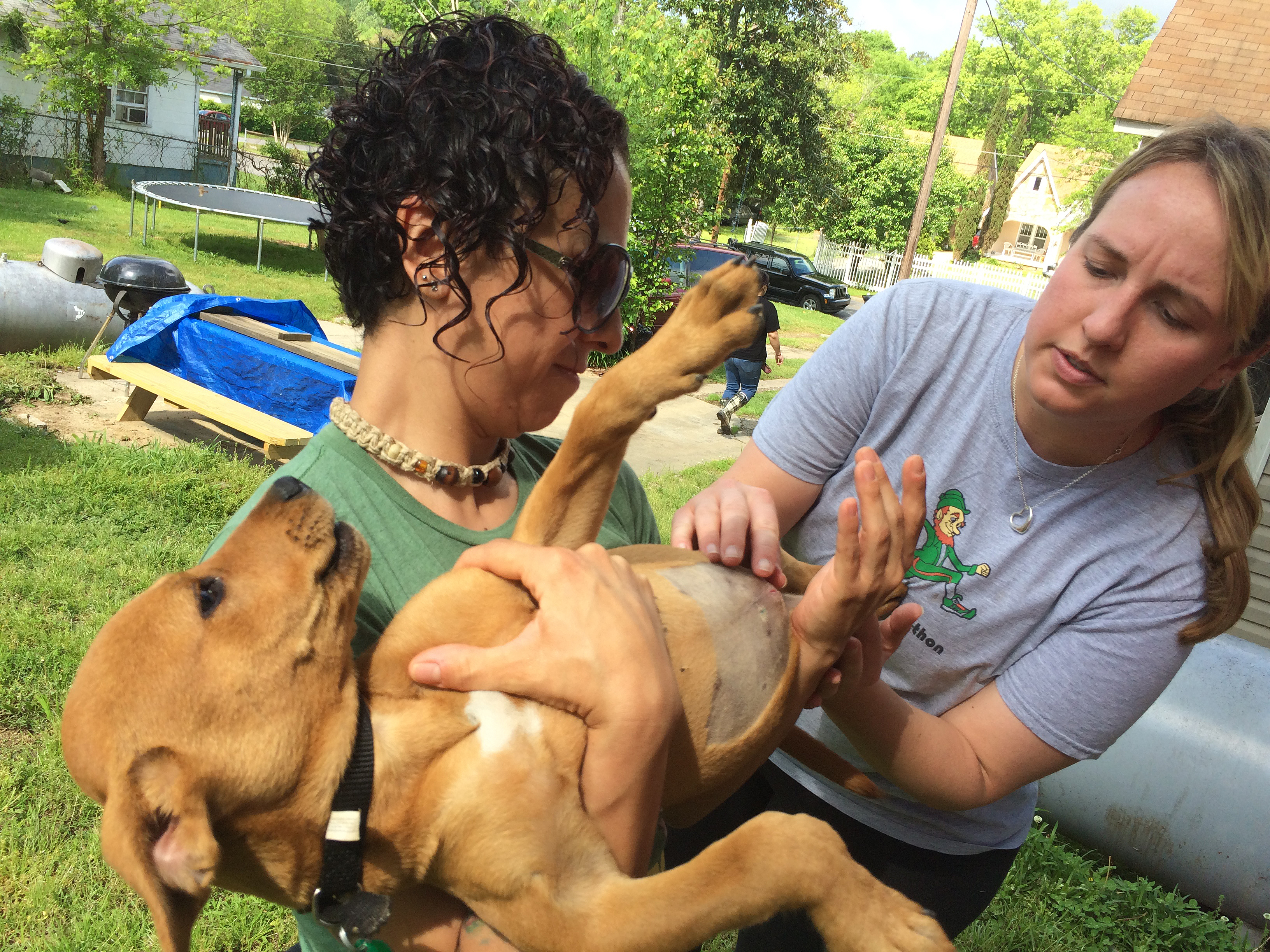
Lucero and Lindsey checking out a puppy with an open spay suture - at least her owner had her spayed. Too bad she already had her outside on a chain, though.

Lucero and Lindsey checking out a puppy with an open spay suture – at least her owner had her spayed. Too bad she already had her outside on a chain, though.

As the morning turned to mid-day, it seemed to me like every family we visited either had a tethered, sick, injured, pregnant or nursing animal. Even though low-cost spay and neuter is indeed available in many communities here in Georgia, few of these people seemed to know about these services or simply hadn’t taken advantage of them. As a result, some homes we visited were simply overwhelmed with too many animals, including one house with two female dogs that had both given birth a couple of weeks apart, resulting in 13 canines under one roof. Another family had been living with 15 small dogs in a tiny, 800-square-foot house and were relieved at the concept of surrendering a few of them to us. When the woman became teary-eyed at the reality of parting with “her babies,” we assured her they would all go to great homes.

Due to the fact that AAU now has upwards of 800 animals in its system, the rescue asks that volunteers make every effort to secure a foster home before accepting an owner surrender so the animal has a safe and secure place to land. While the group tends to rely mostly on AAU for taking any surrendered pets from the community, it also works with a couple of other rescues, including Road Trip Home Animal Rescue, which transports dogs out of Georgia and into regions with higher demand for rescue pets, and Furkids, another amazing local organization that focuses on rescuing cats and small dogs.

Once the woman agreed to surrender five of her 15 dogs, Jennifer and Danielle began a flurry of text messages with their foster network, trying to find placement for the scruffy terrier mixes. Mission accomplished, we loaded the pups in crates and packed them in the back of Jennifer’s SUV, quietly jubilant that these lucky dogs were now headed for much better prospects.

The rest of the day became a blur of more desperate dogs on chains, more litters of puppies or dogs with puppies on the way, cats running around everywhere, none of them fixed, one of them badly injured. One skinny, chewed-up looking tomcat ran up to me as I took a break by Danielle’s truck, crying beseechingly as if he knew I was there to help him. I quickly opened a can of cat food and sat by the skinny feline as he enjoyed his meal, yellow eyes glazed over in contentment. He reminded me of a tiger-striped cat I had had as a child and a wave of melancholy washed over me.

The thin and battle-scarred tom cat enjoying his meal.

The thin and battle-scarred tom cat enjoying his meal.

I must admit it was challenging to not feel animosity toward the people for the neglect we continued to witness, house after house, street after street. But once you started talking to them and looking into their eyes, you realized that most of them were actually kind people who cared about their pets, they just didn’t know any better or simply couldn’t afford to take better care of them.

“A lot of the way these people treat their animals comes out of ignorance – nobody ever taught them how to properly care for an animal,” Danielle explained as we drove to the next street. “Some of them think they’re doing right by them, like, ‘yes, my dog is chained outside, but I feed him.’ They simply don’t understand.”

It makes sense that if you don’t have enough money to take care of yourself and your family, you’re probably not going to spend what little you do have on veterinary care or premium food for your dog. So if your dog gets sick, pregnant or goes without a meal, that’s just how it is, and the animal has to live (or die) with its lot in life. Yes, maybe I am different in that I have always put my animals first, and if I couldn’t afford to properly care for a pet I wouldn’t have one in the first place, but not everyone thinks that way. And therein lies the emotional and mental torture of rescue – enduring the ignorance of human beings and the intentional or unintentional cruelty they inflict upon their pets.

Looking around, watching all these wonderful volunteers bedding down new doghouses with straw, petting dirty, neglected dogs and spooning cans of cat food into bowls for hoards of hungry kitties, I had to wonder, when does this end? As long as these people are living in poverty, so will their animals. So is it realistic for Rachel and her group to just keep coming out here month after month, year after year, and if so, is that really going to solve anything in the long run? Wasn’t this mission like putting a Band-aid over a much deeper, larger wound?

This desperate little Chihuahua couldn’t stop barking with excitement when we arrived. A dog like this belongs on someone’s lap, not on a tether.

This desperate little Chihuahua couldn’t stop barking with excitement when we arrived. A dog like this belongs on someone’s lap, not on a tether.

“I would like to see tethering laws as well as laws for spaying and neutering to end the vicious cycle of overpopulation, euthanasia, and homelessness, but until that happens I will continue to help,” Rachel said. “I have an amazing group of people who help me, from monetary, food, toy and medication donations to physically going out here and ‘getting dirty.’ I can’t do it without this group and so as long as I have their support and can physically and mentally do this, I will.”

Since irresponsible pet ownership and indiscriminate breeding are the main culprits of our pet overpopulation problem, it is indeed spay and neuter (and in my opinion, mandatory spay and neuter) that will ultimately solve this crisis. And that’s why one of the main objectives of the Rome group is to help the community stop the vicious cycle of litter after litter of puppies and kittens being born into poverty and neglect.

“We have approximately 20 or so dogs that the owners would like to have spayed and neutered – that is huge!” Jennifer exclaimed. “This is the first time we’ve heard such glorious of words of wanting to stop the cycle in this community. We are going to work very hard to find a spay and neuter vehicle to come out here in a few weeks.”

As the day wound to a close, I have to admit I was feeling somewhat zombie-like. How many more sad, lonely pit bulls would I see chained in dirty backyards, leaping excitedly at the prospect of any shred of loving attention from a human being? I wanted to take every one of them home with me, especially a blonde and white little girl whose soulful eyes pleaded with me as if to say, “please get me out of here.” It was torture to walk away from her. I haven’t been able to get her out of my head since.

This is the sweet blonde and white pit bull who touched me deeply. She’d obviously been bred numerous times.

This is the sweet blonde and white pit bull who touched me deeply. She’d obviously been bred numerous times.

“Not everybody can do this,” Danielle told me frankly as we drove away. “You have to be emotionally able to handle what you’re going to see and you have to be mentally and emotionally prepared for it. I would welcome anybody who would want to come out and do this but when people ask me about it I’m very honest with them. I tell them, ‘this is what you’re going to see, this is what it’s going to be like and it’s not the safest environment.’ It’s a great feeling to be helping and bringing supplies, and even though you can’t take that dog you’re making its life as comfortable as you can. But the hardest part is when you’ve got to walk away and you see those eyes watching you and they’re looking at you like, ‘come back!’ That’s the part that can haunt you.”

As someone who has always had an affinity for animals and has dedicated her life to spreading awareness about the cruelties non-human species face, I am very grateful to have had such an experience with an incredible group of fellow animal lovers. I walked away with a better perspective and understanding for what frontline rescuers are up against in this region, especially in disadvantaged communities where animal husbandry appears to be two or three decades behind the times. Ignorance begets ignorance, and while many of these people may mean well, they are simply victims of poverty and poor education, plain and simple. Surely these humans deserve our compassion, too.

But ultimately, stamping out animal neglect in our country, whether in rural southern communities or elsewhere, will ultimately come down to enacting stronger anti-cruelty legislation. No community should allow the indefinite tethering of a dog, under any circumstances. But until practices like this are outlawed and people are punished, their behaviors won’t change and the changes won’t be lasting.

“The biggest thing for Rome right now would be anti-tethering laws because all of these dogs are on chains, so that would eliminate that,” said Danielle. “Either you bring your animal inside or you don’t have one or you’re going to keep getting cited and fined, which a lot of these folks can’t afford. That’s where it will start – they’ll have to be held accountable for how they treat their animals. So it’s baby steps toward a bigger picture, that’s what this mission is.”

But until local lawmakers become inspired to enact tougher laws to protect the interests of animals, people like Rachel and her passionate group of kindhearted volunteers will continue to pick up the pieces, either removing animals from the community or helping the remaining ones live more comfortable lives. It may seem like one drop of water in a huge ocean of need, but even small steps can make a difference, even if it’s one pet and one pet owner at a time.

According to the family of this Australian shepherd/cattle dog mix, once the puppy is big enough he’ll be living outside (on a chain, no less) because he’s “too active.”

According to the family of this Australian shepherd/cattle dog mix, once the puppy is big enough he’ll be living outside (on a chain, no less) because he’s “too active.”

Although I highly recommend participating in a community outreach mission with a local rescue group, it’s definitely not for everyone. Improving the lives of animals doesn’t necessarily mean you have to “get dirty” or even donate money. Here are some other ways you can make a difference:

  • Become a foster parent: Rescues are teaming with animals who need safe, loving and secure foster homes where they can be cared for, socialized and nurtured until they find their perfect forever homes. Fostering animals is so rewarding and while it can be sad to say goodbye, you can rest assured knowing you’ve played a crucial role in helping that animal along its path toward the amazing life it deserves.
  • Get up and do something: Anybody can sit back, judge and point fingers. If you don’t like the way animals are treated and you want to see a change, become the change. Write letters to your local legislators, start an online petition, volunteer at your local shelter, donate supplies to a rescue organization or spread the word about animal welfare on social media.
  • Be kind and help out: If you notice someone neglecting their dog, instead of judging or quietly despising them, ask the person if they need a bag of dog food, a $5 bail of straw or a doghouse. Remember, it’s about helping that animal, not whether you like that person or not. And who knows, maybe that individual could use your help, too? No random act of kindness is too small, so just do it.

“Animals don’t have a voice, we are there only voice,” Rachel said. “You can’t just think, ‘someone else will help,’ you have to help and in any way you can. Speak out if you see abuse. Start an outreach program if your community needs it – it’s easier than you think. There are people everywhere who are willing to help, and the difference you will make for the animals will be more than you could ever imagine.”

If you’d like to help this amazing group continue their mission helping the disadvantaged animals of Rome, please go to the group’s GoFundMe page – every little bit helps!

“Never doubt that a small group of thoughtful, committed citizens can change the world; indeed, it’s the only thing that ever has.” – Margaret Mead

Witnessed Animal Cruelty? Don’t Just Stand There, Do Something!

It’s incredibly hard for me to understand why anyone would intentionally hurt an innocent creature. With domesticated animals in particular so dependent on us humans for their care and wellbeing, why would any pet owner allow their animal to suffer or even worse, go out of their way to hurt them? Although conditions for companion animals have greatly improved in the last few decades, especially in western societies, there are still many people who view their pets the old-fashioned way – as property. They don’t recognize animals as sentient beings capable of having emotions and feeling pain, only as objects they have the right to do with as they wish.

It has always dumbfounded me why would anyone leave their dog outside in the freezing cold or extreme heat without shelter (or even at all!), let their injured or sick cat go without veterinary care, or allow their pets to starve. Personally, I think there’s a special place in hell reserved for the !&@$(%)#$* who abuse animals. Just like there are many people in this world who shouldn’t be allowed to have children, there are many people who shouldn’t be allowed to have pets. But unfortunately, our society doesn’t work that way.

This pit bull has spent his entire life chained to a trash can, which his owner considers to be a suitable doghouse.

This pit bull has spent his entire life chained to a trash can, which his owner considers to be a suitable doghouse.

That’s where we animal lovers come in. We sort of have to be the animal welfare watchdogs, making sure the losers and abusers of the world don’t get away with their crimes against non-human species. So in honor of Animal Cruelty Prevention Month, I thought I’d provide some tips about how to recognize animal cruelty and what to do about it.

First of all, keep in mind that animal cruelty laws vary from state to state (all 50 states have them) and that every city or county will have different animal ordinances that spell out the legal versus illegal ways to treat an animal, so it’s important to understand what is or isn’t considered prosecutable animal cruelty in your community.

For example, most caring people would never dream of leaving their dog outside on a tether 24 hours a day, seven days a week with little or no socialization, but in many cities and counties throughout the U.S. it’s still legal to do so. However, if that tethered dog is emaciated, with no food, water or shelter in sight, chances are that the owner is in violation and can be cited for animal cruelty.

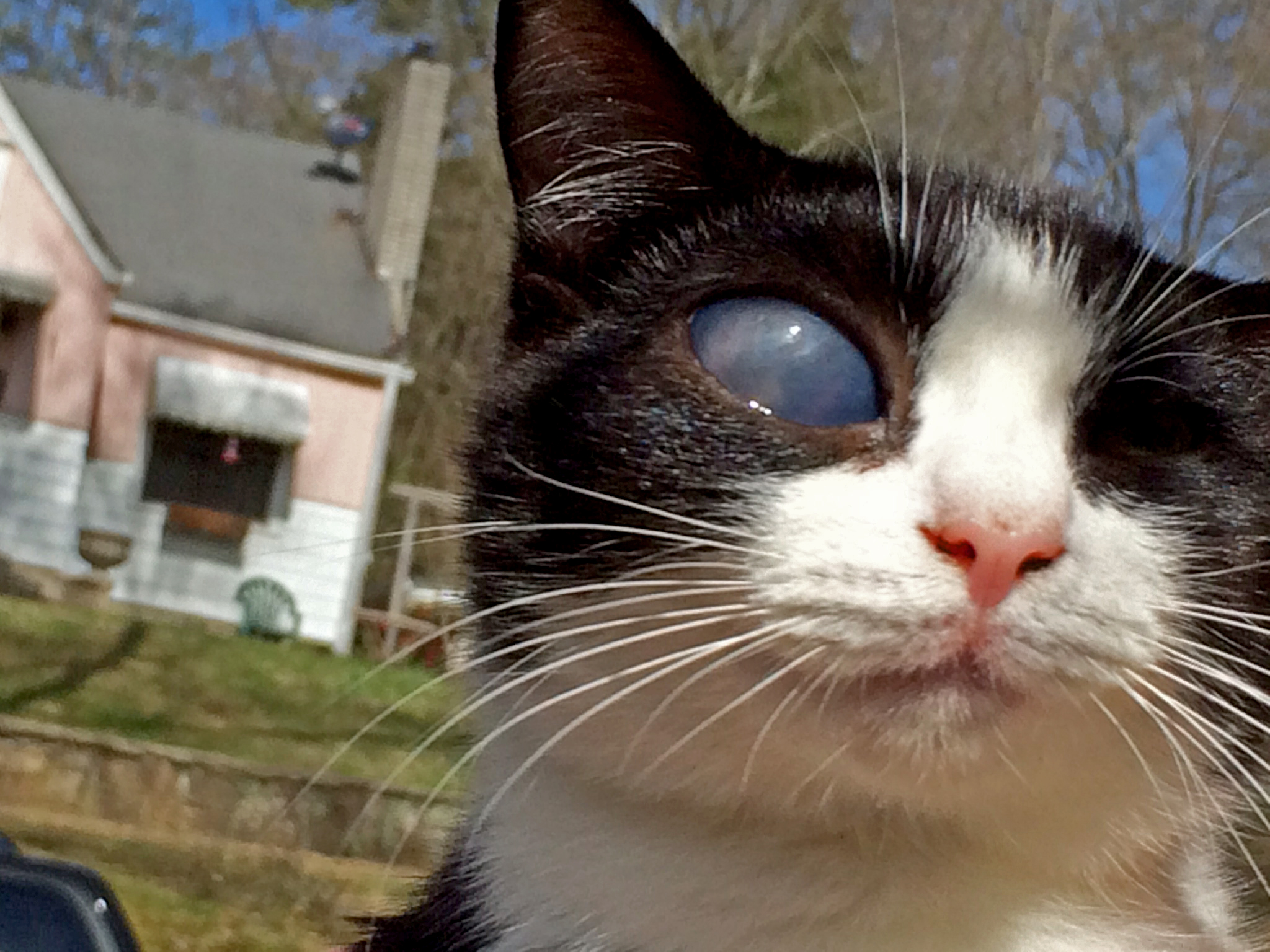
A kitten with an ulcerated eye, a very painful condition that was simply ignored by his owner.

A kitten with an ulcerated eye, a very painful condition that was simply ignored by his owner.

According to the Humane Society of the United States, animal cruelty comes in two forms – direct violence and neglect. While direct violence is the most obvious, animal neglect is the most common. In fact, tons of animals die from neglect every year, right under the noses of the people in their communities. That’s why it’s important to educate yourself about how to identify animal cruelty when you see it.

Here are some signs to look out for:

  • Animals left outside in extreme weather with no shelter
  • Poor living conditions, including filth and dangerous objects near the animal
  • Lack of food and water
  • Emaciated animals
  • Too many animals living on one property/animal hoarding
  • Wounds on an animal’s body/patches of missing hair
  • Excessive amounts of animals kept in small spaces
  • Untreated injuries or illnesses
  • Animal abandonment
  • Prolonged or excessive barking or howling
  • Acts of violence against animals
Great Danes are not supposed to look like this. Photo credit: newbernnow.com

Great Danes are not supposed to look like this. Photo credit: newbernnow.com

So you suspect an animal is being neglected or have observed it being abused – now what?

Pick up the phone: If it’s an emergency situation, call 911, otherwise, call your local animal control or humane agency as soon as possible. Most large municipalities have an animal control department, animal shelter or humane society. If you don’t have an animal control in your area, call the police and report the situation. Relay exactly what you saw, give plenty of details and leave your contact information. You can ask to remain anonymous but do give dispatch a number they can call in case the investigating officer needs to ask you any questions.

Confront the perpetrator (if it’s safe): This is very subjective, but if you feel comfortable and don’t think your life is in danger, speak to the person or have somebody else to go with you, just in case. If I saw my neighbor doing something horrible to an animal I would get my husband to go with me and confront that person, but that’s just me. Ultimately, most cases are best left to law enforcement.

Document the details: If it’s safe, take pictures and/or video of the situation and take plenty of notes. When it comes to prosecuting animal cruelty, a picture really is worth a thousand words and can mean the difference between an abuser getting away with their crime and an actual conviction. When cruelty cases have photographic evidence it’s very hard for the judge to say “not guilty.”

Be persistent and follow-up: If your local animal control or police department isn’t being responsive, call back and ask to speak to a supervisor. It’s important to keep in mind that most law enforcement agencies operate with limited personnel and resources and that most are probably doing their best to conduct timely and efficient investigations. However, if after repeated calls you’re still not getting the response you need, call your local news station – there’s nothing like bad publicity to inspire law enforcement to fix a problem!

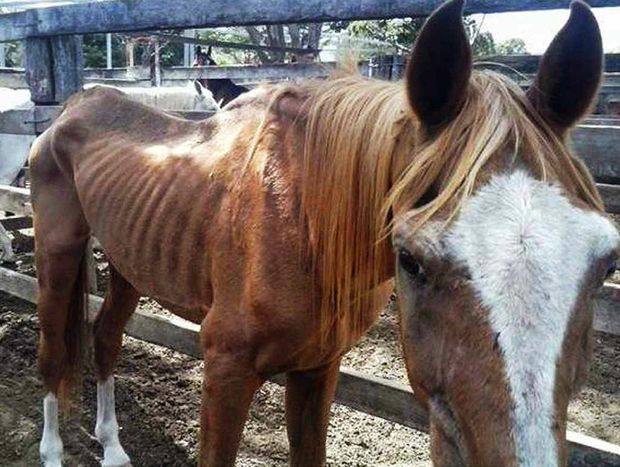
An emaciated stallion. Photo credit: Queensland Times

An emaciated stallion. Photo credit: Queensland Times

So an animal control officer has gone to the property to check on the animal – what happens next?

Typically, an officer will investigate your complaint to see if any animal cruelty laws have been violated. If a violation has occurred, the officer may speak with the owner, issue a citation and give the person a chance to correct the violation. If the neglect or abuse is extreme, however, the officer will remove the animal and take it to the county shelter or humane agency where it can be protected from further harm. The agency will then present the case to the local prosecutor’s office for further evaluation and possible prosecution.

Be prepared that you may be asked to testify about what you witnessed. Since animals can’t speak for themselves, human witnesses are crucial for building strong, prosecutable cruelty cases, so be willing and able to do your part, if possible. You can always follow-up on a case by contacting your local government records office and requesting this information in writing. Since cruelty cases are part of the public record, you’ll be able to access information including whether the case went to court, if the owner paid a fine and whether the conviction was a misdemeanor or a felony.

Animals have no voice, so it is our obligation and duty to speak for them, especially when they’re being mistreated. We will only be able to combat animal cruelty if all of us are vigilant and willing to take a stand, so if you witness or suspect animal abuse, don’t just stand there or walk away – report it. Your call may be the only chance that animal has to find help and possibly be rescued from a miserable or life-threatening situation. Animal cruelty is a crime, and the more often abusive individuals are punished for this behavior, the less likely others will be inclined to do the same. So if you see an animal in distress, don’t just assume someone else will take care of the situation – take action!

A neglected dog rescued from a hoarding situation in North Carolina. Photo credit: HSUS

A neglected dog rescued from a hoarding situation in North Carolina. Photo credit: HSUS

For great tips on how to prevent animal cruelty, check out the ASPCA’s Fight Cruelty web page.

“The only obstacle that stands between you and making a difference is getting up and doing it.” – Anonymous

Saving Alex, the Unbreakable Jindo Dog

Animal rescuers truly are some of the most dedicated, generous, loving individuals I have ever met. The lengths to which some of these people will go to help animals is so inspiring, it’s actually helped restore some of my faith in humanity. Covering animal welfare and cruelty issues like I do, I have often found myself losing that faith when I see how human beings continue to abuse and enslave animals throughout the world. But then I get to connect with special people who value and appreciate animals, who see non-human species as beings deserving of respect and compassion and freedom from harm. Like me, they just want to make a positive difference in the lives of innocent creatures.

The following story is a perfect example of people willing to go the extra mile to help an animal in need, regardless of the obstacles or odds against them. It’s the story of a traumatized Korean Jindo mix dog named Alex, who was given a second – and a third – chance at life, thanks to a kind-hearted savior and an amazing rescue organization that refused to give up on him. They are the true heroes of this story.

When Craig Petronella first met Alex, he was a scared, dirty, skinny little puppy confined to a filthy crate. The little white pup was only eight weeks old, yet he was already living with his second abusive owner. As a U.S. Service member stationed in South Korea, Petronella would regularly pass by little Alex and couldn’t help but notice the pup’s sad situation. Being confined to a filthy crate 24/7 is no life for a tiny puppy, but in Korea, it’s actually common practice to crate or chain dogs outside indefinitely, with little human contact and minimal care.

One day, Petronella found out that Alex’s owner no longer wanted him and was ready to either sell the pup to dog meat traders or abandon him to the streets. South Korea is home to a thriving dog meat trade that murders approximately 2 million dogs each year, so whether he was set loose or sold, the pup appeared doomed to end up on someone’s dinner plate.

But the kind military serviceman wasn’t going to let that happen. After convincing Alex’s owner to let him adopt Alex, Petronella brought the pup home during one of his leave times to live with him and his family in Virginia. The Petronellas were experienced dog owners, so they assumed that with a little love and patience, Alex would soon forget his abusive past and begin to enjoy life as a beloved member of their family.

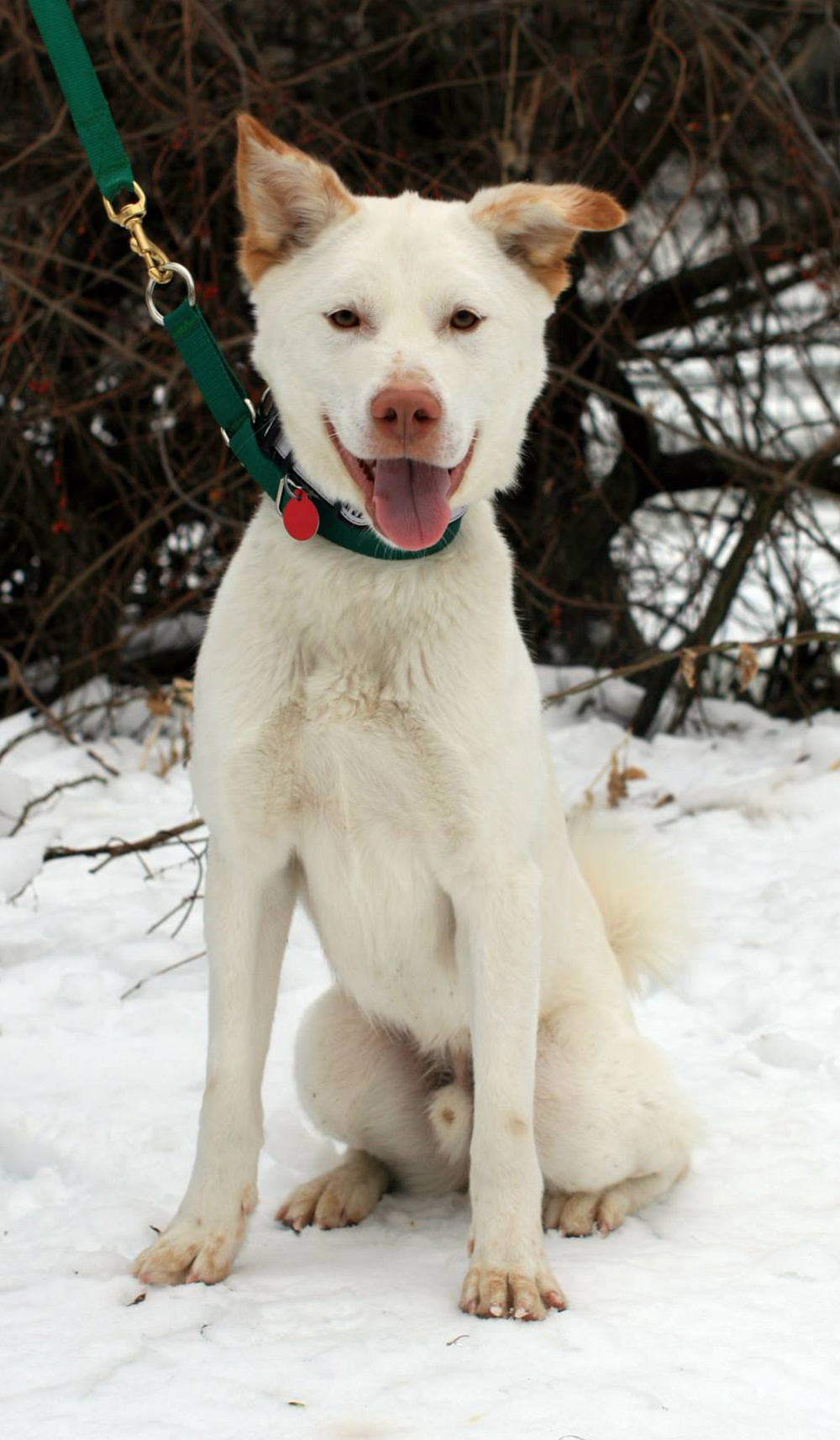
Alex flashes his sweet smile. Photo credit: Treasured k9s

Alex flashes his sweet smile. Photo credit: Treasured k9s

But sometimes love isn’t enough when it comes to rehabilitating an abused dog. Due to his early trauma, the young Jindo mix suffered from deep-seated fear issues that began to worsen as he grew. When confronted with anything that frightened him, such as fast movements, loud noises or strange people, the dog would “shut down” by trembling uncontrollably, pressing his eyes tightly shut and cowering against the ground, paralyzed in fear. If he couldn’t hide, he’d act out aggressively.

Though the family loved Alex and tried their best to train and work with his issues, they finally realized his growing problems were beyond their scope. With no one willing to adopt the troubled eight-month-old pup, the family feared they would have no other choice but to euthanize him. But not willing to give up on Alex until they had exhausted every last option, the Petronellas reached out to a rescue organization they hoped would be his saving grace.

Enter Treasured k9s, a nonprofit organization that specializes in rescuing and rehabilitating Jindo dogs throughout the east coast region. Since their founding in 2008, this rescue has saved, rehabilitated and re-homed approximately 70 Jindos, many with behavioral challenges that most rescues would not want to deal with and shelters would simply euthanize. But then, this type of dog isn’t meant for the inexperienced dog owner.

A white purebred Jindo. This magnificent breed also comes in "yellow," black and tan, brindle and solid black coat colors. Photo credit: Treasured k9s.

A white purebred Jindo. This magnificent breed also comes in “yellow,” black and tan, brindle and solid black coat colors. Photo credit: Treasured k9s.

As a rare, primitive breed originating from Jindo Island, the Korean Jindo is a magnificent, highly instinctual dog originally bred for hunting and protection. While they are revered as Korea’s national treasure and considered status symbols throughout Korean-American communities, indiscriminate and irresponsible breeding combined with inexperienced dog ownership has resulted in more and more Jindos meeting their deaths in U.S. shelters every year, Kristen Edmonds, founder and president of Treasured k9s, explained to me.

“They’re very aloof, not typically warm to strangers, very dominant and their instincts are very high, so they’re not your typical happy-go-lucky dog,” Kristen said. “You really have to be a strong, confident leader with them. They’re very active, so they need a lot of exercise and they’re a very healthy, long-lived breed, so you could easily end up with one for 18-20 years. But you really have to be the right personality for this kind of dog. If you understand their personalities you’ll never have another type of dog because they’re the most intelligent, loyal, intuitive dogs you’ve ever had in your life.”

Because they’re naturally protective and territorial, Jindos typically don’t do well in shelter environments, becoming fear aggressive and thus, un-adoptable. And that’s basically a death sentence for this complex, misunderstood breed of dog.

Alex having a zen moment. Photo credit: Treasured k9s.

Alex having a zen moment. Photo credit: Treasured k9s.

But Kristen wasn’t going to let Alex meet that sort of end. Figuring he was at a prime age to overcome his issues, she agreed to take him on and headed straight for New York-based Dog Behaviorist Jeff Kolbjornsen, who estimated the young dog would need a couple of months of training and rehabilitation to help build his confidence and learn to trust people. But once Alex was evaluated, it became obvious that not only was this process going to take more time, it was also going to be more challenging than expected.

“When Alex first arrived at our center he was extremely fearful of me, had no training skills at all, and had a huge fear of the leash and collar that he was required to wear for training,” Kolbjornsen said. “The degree to which Alex bucked, screamed, and tried to get away by trying to bite was one of the more severe fear-induced demonstrations that I have seen.”

Plus, the trauma of being separated from his family wasn’t helping matters, explained Kristen. Here he was, in a strange place with a strange man (he was very sensitive to men to begin with) and all these new people – the nervous pup was simply terrified.

But after six months of daily socialization and rehabilitation – to the tune of $20,000 – Alex had slowly blossomed into a happier, more well-adjusted dog. Yes, that training bill had cost Treasured k9s a lot more than they’d planned, but seeing Alex playing nicely with other dogs, being more at ease with new people, obeying commands, and understanding his role and hierarchy in human relationships was worth every penny, Kristen said.

“The good thing about Alex is he’s very interested in positive reinforcement and reward, which makes it a lot easier to work with him,” explained Kristen. “We’ve come across many Jindos who have absolutely no interest in pleasing you, or in treats or toys, so when you can’t use positive reinforcement it can really be more difficult to work with them.”

Alex enjoying a good scratch. Photo credit: Treasured k9s.

Alex enjoying a good scratch. Photo credit: Treasured k9s.

Kristen should know. She began rescuing Jindos by accident after volunteering with a Siberian husky rescue that sent her a foster dog who appeared to be a small white husky but turned out to be Jindo mix. Plus, her mother-in-law is Korean, so Kristen has a strong understanding of the culture and where these dogs originate. Intrigued, Kristen began to research Jindos and how they were becoming more prevalent along with the increasing South Korean population in the U.S. After realizing there were only two small Jindo rescues in California (a state where homeless Jindos are the biggest problem), Kristen saw a need for a breed-specific rescue that could cover the eastern U.S.

With his formal training completed, Alex arrived at his foster home, where he adapted quickly. But when the family’s Jindo began displaying aggression toward him, Kristen moved Alex to a second foster home, where he has remained and been thriving ever since. Now over a year old, he is simply waiting for the perfect forever home, one capable of providing him with structure, rules and boundaries.

“He’s really come around a lot faster than we expected because he’s been moved twice now and he hasn’t had any setbacks – it’s all been positive and it’s actually helped him,” Kristen said. “He’s happy, sweet, very loving, he’ll get up on the sofa and cuddle, and he loves to play. He’s gorgeous, a little bigger than your typical Jindo at about 50 lbs, and a little longer and taller. We think he’s a Jindo mix because he’s got a softer personality than your typical Jindo – they’re more cat-like in that they like their affection and then they’re done.”

While Alex still reacts fearfully to loud noises, he is no longer fear reactive. Still, whoever adopts this sweet boy will have to understand that working through his fear triggers will probably be a lifelong process, advised Kristen.

“My goal is to place Alex with an owner who is calm, observant and firm – he requires patience, not dominance,” she said. “He would excel in a home with another medium to large-sized, active and confident dog, someone to keep him in check and help him gain confidence by example. Because he’s not full Jindo, he is a little too happy-go-lucky for a purebred Jindo. These dogs have a very strong attitude of ‘we must follow the dog pack rules – don’t be too happy,’ so all the other Jindos he’s been around have been getting mad at him.”

Alex and his foster brother, Cosmo. Photo credit: Treasured k9s.

Alex and his foster brother, Cosmo. Photo credit: Treasured k9s.

Alex’s ideal home would also be one without cats or children, although older, calm and dog-savvy kids in an experienced home could work, Kristen said. His new family will also need to live in the New York Tri-state area, as this will allow Treasured k9s, along with Kolbjornsen, to act as an ongoing support system, if needed.

Meanwhile, Alex’s foster mom, Amanda, has been doing a fabulous job continuing his training and building his social skills, including challenging him to overcome some smaller fear issues.

“He loves to run and chase,” Amanda said. “If you aren’t paying attention to him he’ll come over and sit in front of you until you play with him. He can get wound up while playing outside but once inside he settles down nicely. He does have a ‘personal space bubble’ in that he seems to be fearful of anything that gets too close to him uninvited, which makes sense since he’s still building trust.”

Ultimately, Alex deserves a patient, loving, forever home willing to do what it takes to help the overgrown pup become the wonderful dog he is destined to be. The once-mistreated Jindo mix is living proof that even the most difficult rescue and rehabilitation cases deserve a second (and a third) chance.

“In the right home Alex is only going to continue to thrive and blossom and once he really settles in he’s going to be a sweet, great, fun dog,” Kristen said. “He’s just a big, goofy puppy – that little puppy that never got to be.”

Just a big puppy. Photo credit: Treasured k9s.

Just a big puppy. Photo credit: Treasured k9s.

Sometimes it takes a village to save an animal, and in this case, that village succeeded beyond any expectation.

Treasured k9s is in dire need of donations to help with Alex’s remaining $10,000 training bill. If you’d like to help this wonderful organization continue saving and rehabilitating more Jindo and Jindo mix dogs like Alex, please visit their website donation page.

Also, if you live in the New York Tri-state area and think Alex might be the right fit for you (and vice versa), please visit the Treasured k9s website and fill out an application today! You can also learn more about this great organization and their dogs on Facebook.

“Once upon a time, there was a wise man who used to go to the ocean to do his writing. He had a habit of walking on the beach before he began his work.

One day, as he was walking along the shore, he looked down the beach and saw a human figure moving like a dancer. He smiled to himself at the thought of someone who would dance to the day, and so, he walked faster to catch up.

As he got closer, he noticed that the figure was that of a young man and that what he was doing was not dancing at all. The young man was reaching down to the shore, picking up small objects, and throwing them into the ocean.

He came closer still and called out, “good morning! May I ask what it is that you are doing?”

The young man paused, looked up, and replied, “throwing starfish into the ocean.”

“I must ask, then, why are you throwing starfish into the ocean?” asked the somewhat startled wise man.

To this, the young man replied, “the sun is up and the tide is going out. If I don’t throw them in, they’ll die.”

Upon hearing this, the wise man commented, “but, young man, do you not realize that there are miles and miles of beach and there are starfish all along every mile? You can’t possibly make a difference!”

At this, the young man bent down, picked up yet another starfish, and threw it into the ocean. As it met the water, he said, “It made a difference for that one.” – Loren Eiseley

Pet Stores and Puppy Mills – Don’t People Know Any Better?

They drive me absolutely bonkers – people who purchase puppies from pet stores. It just boggles my mind why anyone would still do this when there is such a plethora of information out there about the direct connection between pet shops and puppy mills. It’s almost common knowledge that you should NEVER purchase a puppy from one of these businesses, yet people still do it. So I have to wonder, do these people know but just don’t care, or are they simply ignorant?

Case in point, I have a friend who wanted to surprise her son with a puppy on his 8th birthday. Did she take the time to research a specific breed and look for a “responsible breeder” from whom she could purchase a healthy, well-bred, home-raised puppy, or even better, consider surprising her child with a gift certificate to their local Humane Society so he could pick out a rescue dog? Nope. She simply ran out to her neighborhood puppy boutique and bought an over-priced and most likely, badly bred “designer” pup because it was “cute” and she was in a big hurry to get a dog in time for her son’s birthday party. Just so she could stick the poor thing in a gift box with a bow on top and film her boy’s “priceless” reaction as he opened his present, squealing in excitement (the boy, not the pup). Cue barfing sound.

I know I sound like a bitter, cynical curmudgeon but it just makes me so upset, the impulsiveness, ignorance or indifference of people who are knowingly or unknowingly helping to perpetuate an incredibly cruel, greedy and inhumane industry – commercial dog breeding. Devoted rescue people and animal welfare organizations have been tirelessly trying to educate the public about mass breeding facilities, aka puppy mills, for years and years, yet people like my friend think it’s perfectly okay to plunk down $800-$2,000 dollars on a ridiculously over-priced puppy because they “want it and they want it now,” putting about as much thought into buying a dog as they would a stereo.

Photo credit: cityroom.blogs.nytimes.com

Photo credit:
cityroom.blogs.nytimes.com

So here’s what I wish I could say to my friend, who is a smart, professional woman and really should have known better. No, I will probably never say any of this to her face, but maybe she’ll read it and get the hint (and possibly stop talking to me). Or she’ll never read it and be none the wiser. Here goes.

Congratulations, _____, you just purchased a puppy mill puppy! What is a puppy mill, you ask? A puppy mill is a commercial breeding operation that churns out mass quantities of puppies for profit, with no regard for the genetic quality, health and welfare of their dogs. These lovely operations exist for the sole purpose of making money and are a huge contributor to our nation’s pet overpopulation problem. According to The Puppy Mill Project, approximately 2.5 million puppies are born in puppy mills every year. In fact, it is believed that 99 percent of all puppies sold in pet stores come from these despicable places, so I can pretty much guarantee that your son’s furry little birthday present came from a puppy mill.

Photo credit: Humane Society of the United States

Photo credit: Humane Society of the United States

Life really sucks in these horrific places. Breeding dogs and puppies are kept in squalid, inhumane conditions, deprived of veterinary care, exercise, socialization, grooming and proper nutrition. They live in filthy cages and often sleep in their own waste. Puppies are typically born with congenital illnesses and behavioral problems, made worse by the fact that they’re often torn from their mothers and sold to pet shops before they’re even weaned. But at least the little guys get the chance to escape the puppy mill and hopefully live out their lives in decent homes. For their parents, however, the hell never ends.

Can you imagine spending your whole life in a cage with wire flooring that causes severe injuries to your feet and legs? Thanks to the Animal Welfare Act, it’s actually legal to keep a dog in a wire cage – stacked on top of other wire cages – for its entire life. What a nice way to treat man’s best friend.

Photo credit: Humane Society of the United States

Photo credit: Humane Society of the United States

Forced to reproduce over and over, breeding dogs live miserable lives, never knowing the feeling of grass under their feet, the compassionate touch of a human, or life in a loving home. They either spend their entire lives outdoors, exposed to the elements, or crammed inside filthy structures where they never get to breathe fresh air or feel the sun on their fur. When they are no longer able to breed they are either auctioned off or killed.

Yes, I’m sure that friendly pet store employee went out of her way to confidently assure you that your sweet little designer puppy came from a “USDA licensed breeder.” But don’t be fooled – that claim is meaningless. Every breeder who sells to a pet store or a puppy broker is required to be licensed by the United States Department of Agriculture. But that doesn’t mean that these mill operators are required to give a damn about the quality or wellbeing of their dogs. And the USDA is sadly lax when it comes to inspecting these facilities or enforcing legal standards of care, which are shamefully lacking and far from what any reasonable person would consider humane, anyway. In fact, many puppy mills continue to operate despite numerous cruelty violations. So to sum it up, USDA breeders ARE puppy mills, plain and simple.

Photo credit: Humane Society of the United States

Photo credit: Humane Society of the United States

Responsible private breeders, aka “hobby breeders,” those who actually care about what they breed and who they sell to, DO NOT sell their dogs to pet stores or puppy brokers, advertise in newspapers or sell their dogs over the Internet. They go out of their way to screen potential buyers to make sure their puppies go to good homes and will take lifetime responsibility for the animals they’ve bred. They take pride in their dogs, breed for health and temperament as well as physical beauty, and often have long waiting lists for their litters.

Although I’m not a big fan of breeding in general (I believe that our country, not to mention our world, could use a complete moratorium on dog breeding until we get our homeless pet population under control), I do believe there is a place for responsible purebred dog breeders, although the “good” ones seem to be very few and far between.

Then there are “backyard breeders,” another scourge of the canine world. But that’s another rant for another time.

No, you did not “rescue” your puppy from that pet shop. What you did was create more demand for another mill puppy, further condemned your puppy’s parents to a lifetime of suffering, and supported one of the largest systematic forms of animal cruelty in the nation. Not to mention you helped keep the greedy pet store in business, which egregiously overcharged you for your impulse buy, by the way.

Photo credit: stlouis.cbslocal.com

Photo credit: stlouis.cbslocal.com

Next time, consider adopting from your local shelter or a rescue. Over 2 million pets die in U.S. shelters every year, so not only would you be saving an innocent life, you’d also be ensuring that your money doesn’t support a puppy mill and the lousy businesses that sell them. If you have your heart set on a particular breed, keep in mind that one out of every four dogs in shelters are purebred and that there are tons of breed-specific rescue groups literally overflowing with dogs looking for good homes.

So congratulations on your furry little bundle of joy! I truly hope your new puppy beats the odds and grows up to be a healthy, happy, well-adjusted member of your family, free from the congenital defects and behavioral issues typical of a puppy mill dog. Meanwhile, I’ll be keeping my fingers crossed for you.

So that’s what I would say if I knew my friend wouldn’t freak out on me and maybe end our friendship. I probably just need to “get over it” and be happy for her and her son. She bought the doggie in the window, end of story. And I know what it’s like, to walk into one of those stores, stare through the glass partition, make eye contact with a sweet little fur baby and feel my heart melt. Only I knew enough to walk away and she didn’t, apparently. Who knows, maybe she’ll eventually find out where her dog came from, realize her mistake, and vow to never do it again. After all, I didn’t always know about the evils of pet stores and puppy mills – I had to learn it all on my own. In the end, I guess you have to meet people where they are and hope they’ll become enlightened when the time is right. You can only hope.

To learn more about the evils of puppy mills and how to stop them, as well as how to responsibly acquire a puppy, visit the ASPCA and HSUS websites for tons of great information and resources. Interested in giving a former mill dog a loving home?Check out National Mill Dog Rescue for more information on how to adopt today!

“You may choose to look the other way but you can never say again that you did not know.” – William Wilberforce

Why I Care Like I Do

Blame it all on Facebook. There I was, innocently scrolling through my morning news feed, sipping coffee and catching up with what my friends were doing, when I stumbled upon a photograph that changed my life.

The image depicted several German shepherds on the back of a rickety-looking truck, packed in cages far too small for their large, long-legged bodies. In fact, the dogs were crammed in so tightly, their paws stuck out between the metal bars in awkward, seemingly painful positions. Languishing beneath a thin tarp that barely shielded them from the hot sun, they were clearly suffering, their mouths hanging open as they panted, their faces the epitome of stress and exhaustion. And there, leaning against the truck’s passenger side door stood the driver, a skinny Asian man smoking a cigarette with a blasé expression on his face, seemingly oblivious to the anguish of the animals in his care.

The scene hit me square in the heart. These poor canines could have been my shepherds, who at the time were dozing contentedly in their respective spots on my home office floor, their bellies full of breakfast. And as I read the photo’s caption my blood turned to ice. These beautiful, intelligent, emotional creatures weren’t headed to a shelter or anyplace where their suffering would be ended and eventually forgotten. These unfortunate dogs were headed to the live meat markets of Vietnam, where they would be slaughtered and eaten.

I felt as if my brain was about to explode. Did people in Asia really eat dog meat? Wasn’t that just an old joke? Maybe they had in the past, during times of desperation, of famine, but not now, not in the 21st century! I simply couldn’t believe what I was reading. I had to know more. I did a Google search and began to read and read and then read some more. And with every article, every website, every image, graphic or otherwise, my heart began to break into more and more pieces.

Yes, I discovered, people in Asia and even Africa eat dog (and cat) meat. In fact, pet meat is a multi-billion-dollar, unregulated trade, especially in parts of China, South Korea and Vietnam, where the flesh of companion animals is considered a delicacy and purported to have (unproven) health benefits. Approximately 10 million dogs and cats are eaten each year in China alone. But the worst part? These “humans” involved in this trade weren’t just killing these animals, they were torturing them first, living under the false belief that the adrenaline stimulated by intense fear and suffering makes a dog or cat’s meat more flavorful and beneficial to one’s health.

Suddenly my reality was no longer the same. I felt like Alice after she’d fallen down the rabbit hole, or Neo in “The Matrix” after he swallowed the red pill. I knew I couldn’t go back to being happily oblivious that this level of cruelty existed – those days were over. I would have to do something, and at that very moment, I decided that I would do what I did best – write. I would use my writing skills to let the world know that this horrible trade existed and must be stopped.

Mind you, my objective wasn’t to condemn any culture for its food choices but to stop this egregious cruelty. To “humanely” kill and then eat an animal is one thing, but to intentionally put it through prolonged, agonizing pain is another. That is simply barbaric and wrong.

I felt like I was on fire. I contacted the animal welfare organization that had posted the photo and volunteered my writing and editing services to them. I learned everything I could about the trade, its history, its economic impact, its players and the propaganda and fake medicine they tout to perpetuate the demand and thus, line their pockets. I forced myself to watch videos I now wish I hadn’t seen and cried out loud in horror and despair. What I was witnessing was raw barbarity. How could any human being do such things to another living creature?

My brain haunted with images I couldn’t shake, I lay awake at night, staring into the darkness and sobbing at the thought of all those innocent animals that were probably suffering right at that very moment, while I was powerless to stop it. Unable to halt my tears, I often awakened my poor husband, who wasn’t sure what to do but hold me until I cried myself to sleep.

I knew it was wrong to blame an entire culture, that there were many wonderful animal lovers and activists in these countries who cared about animals, despised this trade and were fighting to stop it, but I struggled with hateful, judgmental and racist thoughts nonetheless. Though I tried to remind myself that people involved in the dog and cat meat trade were most likely ignorant and desensitized individuals who were the product of an environment bereft of compassion and empathy, I hated them nonetheless.

It seemed that the more I learned, the angrier I became. I went through a very bitter, cynical period. I got irritated when someone would ask me what I was writing about and when I would try to tell them they’d make a face and cut me off with, “ugh, okay, stop, I don’t want to know!” I didn’t understand why people would rather be ostriches choosing to remain ignorant rather than become enlightened so they could either do something to stop this suffering or simply help to spread awareness, too.

Then I realized I was being a bit of a hypocrite – with my own eating habits. Here I was, consuming the meat of farm animals while at the same time judging other cultures for eating the meat of companion animals. What made the lives of pigs, chickens, cows, lambs and turkeys any less important than those of dogs and cats? No creature, be it human or non-human, wants to suffer and die. I knew I had to walk the walk if I was going to talk the talk, so I started reading everything I could about the evils of factory farming to help lose my taste for animal flesh, something I had always consumed in moderation but still enjoyed from time to time. I read Jonathan Safran Foer’s “Eating Animals” and from cover to cover in two days. What a brilliant book. It opened my mind and did its job by ending my desire to eat meat forever. It’s been two years since I last tasted animal flesh and I’ve never looked back.

I felt good about not eating animals. I had been practicing yoga for almost 20 years and had always tried to live by the yamas and niyamas (the essential principles of a yogic life), one of the most important being ahimsa, or non-violence. But while I had stopped being violent in my eating habits, I was still being violent in my thoughts – toward people who either didn’t seem to care or “didn’t want to know.” I realized that harboring all this anger and resentment was only hurting my psyche and not solving anything, so I began to shift my thinking and my attitude. After all, did I really want to be one of those self-righteous vegans? Not really.

Sure, anyone with a compassionate (non-psychopathic) heart cares about animals, but I do believe there is such a thing as “compassion fatigue” in our society. Our world is riddled with so many problems, so much cruelty and pain, that I think most people feel helpless, overwhelmed and not sure what to do or where to even begin. So they shut down. I’ve certainly been there. And just because my eyes were open didn’t mean that everyone, even members of my own family, were interested in opening theirs.

I couldn’t blame some of my friends for saying they couldn’t read my Facebook posts anymore, which had become an outlet for my burgeoning animal activism. So what if they just wanted to see pictures of cute, fuzzy puppies with inspiring quotes to make them feel all warm and fuzzy inside? I knew I had to try to understand where most people were coming from so I could let go of my frustration with their lack of “likes” when I posted something I thought was really urgent and important. I knew I would find my “tribe” of fellow animal activists eventually, but meanwhile, it was time to find other platforms for my animal-centric writing and awareness efforts. And that’s when I began to write for Dogster.com and soon after, started this blog.

For thousands of years, humans have been exploiting animals for their own benefit. What right do we have to continue this tyranny, especially now that we know without a doubt that animals are sentient beings who have emotions and feel pain, just like us? Non-human species don’t have the ability to fight for their rights, tell their own stories, or change the systems that are harming, enslaving and murdering them. So I will tell their stories and be their voice and maybe, just maybe, I will get through to someone and they will feel inspired to help animals, too. Just imagine if everyone did one thing, big or small, to make a difference – what a safer, happier and more compassionate world we could co-create together!

So this blog is dedicated to the animals, to all the amazing, unique and inspiring individuals, past and present, who have touched my life, loved me unconditionally and always stood by me. I have been lucky enough to call many dogs, cats, rabbits, chickens, goats and horses my closest friends, creatures who made me laugh, gave me love and asked for very little in return except to be taken care of and treated with kindness. They have been my greatest teachers, forever inspiring me to be a better person and a more loving caretaker. I can’t imagine who I would be or what my life would be like without them.

Me and my boys, Hugo (left) and Gizmo (right). Hugo has since traveled to the Rainbow Bridge. His mommy really misses him.

Me and my boys, Hugo (left) and Gizmo (right). Hugo has since traveled to the Rainbow Bridge. His mommy really misses him.

“Never, never be afraid to do what’s right, especially if the well-being of a person or animal is at stake. Society’s punishments are small compared to the wounds we inflict on our soul when we look the other way.” – Martin Luther King Jr.