Hey, PeTA, Leave Those Pets Alone!

Unless you’re an animal lover who’s been hiding under a rock lately, you’ve heard about PeTA’s disturbingly high-kill rate at its Norfolk, Virginia shelter. We’re talking almost 90 percent. And if you’re like me you’ve probably been scratching your head in wonderment since you learned about these unsettling activities. Isn’t this organization called the “People for the ETHICAL Treatment of Animals?” How is euthanizing so many dogs and cats ethical? It seems completely counterintuitive to what PeTA professes itself to be – a passionate defender of animal rights.

As a former supporter of this organization, I was very disappointed to learn about its antiquated and drastic approach to dealing with unwanted, abused and neglected companion animals, a deadly practice that has evidently been going on for quite some time. It was very disillusioning for me, as I’ve always admired the amazing work PeTA has done to educate the public about animal abuse and expose the callous individuals and cruel industries that harm non-human species. From factory farming and fur to cosmetic testing and circuses, PeTa’s powerful investigations and public demonstration campaigns have been instrumental in helping to spread awareness, change behaviors and shift our society’s attitudes toward animals. The organization has been admirably relentless in driving the point home that animals do not deserve to be used, abused or enslaved by humans, and that we have no right to take their innocent lives. And for that reason, I became a believer.
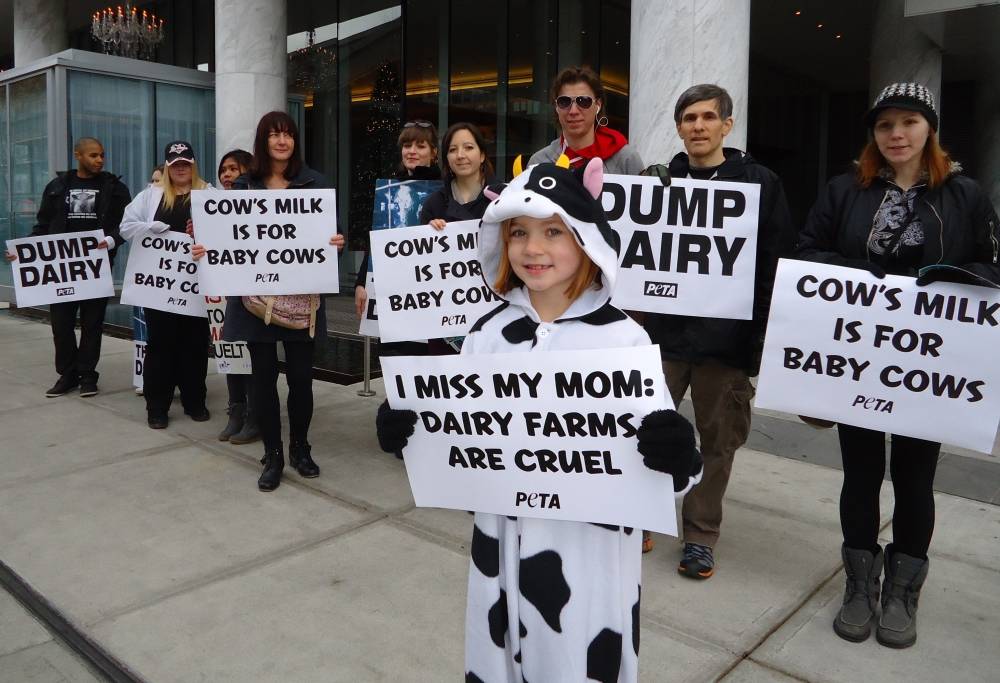
PeTA demonstrators protesting the B.C. Dairy Industry Conference in Vancouver, Canada. Photo credit: straight.com

PeTA demonstrators protesting the B.C. Dairy Industry Conference in Vancouver, Canada. Photo credit: straight.com

But why is it okay for PeTA to preach about not killing cows, chickens or pigs, only to turn around and destroy thousands of dogs and cats at its “shelter,” a place that by definition should be safe, temporary home for animals offered for adoption? For the past nine years, PeTA’s adoption rate has hovered around a dismal 1 percent, while its euthanasia rate has remained frighteningly high. While the organization adamantly defends its high-kill practices, claiming its “shelter of last-resort” only euthanizes sick, old, injured, abused and neglected animals no one else wants, there is a plethora of evidence to the contrary, and it is troubling.

According to tragic, first-person accounts from former PeTA employees and watchdog groups, the well-funded organization is quick to dispatch healthy, young and adoptable dogs and cats alongside the sick and too far-gone, often within hours of obtaining them, while making no concerted effort to find the animals new homes. In some cases PeTA employees have actually stolen pets from their homes, only to euthanize them immediately.

Former PeTA activist, “D” (who wishes to conceal her identity, due to the fact that she fears repercussions from the organization) began distancing herself from PeTA once she learned about the nefarious activities at its Norfolk headquarters.

“I helped PeTA with an investigation against a factory pig farm,” D told me. “They ended up getting felony counts against the people who were abusing the animals, which was great (because) a lot of times these people just pay a fine, get a smack on the wrist and move on. In those days PeTA didn’t used to have a shelter or get into that kind of involvement, they were more about investigations exposing people and companies for how they were abusing animals. That’s the path they used to be on when I was with them years ago and I believed deeply in that until they turned hard right and started killing companion animals.

She continued, “I didn’t understand what they were doing. I’ve tried to take a step back and understand their mentality but I can’t. A 90 percent euthanasia rate contradicts everything they’re supposed to represent. And I don’t understand the concept of not wanting (adoptable animals) to become companions in really good homes, where they can get lots of love. It’s just really sad that PeTA has gone the route that they went. It’s disappointing on so many levels and I think they’ve lost a lot of supporters because of it.”

Hoping to interview people with first-hand knowledge of PeTA’s Virginia operations, I reached out to an animal rescue friend who works with two former employees of the Norfolk shelter, but she said they were uncomfortable speaking to me, even anonymously. Like others who have worked for PeTA, they feared the organization’s intimidation tactics, designed to silence those who speak out against it. Although I was disappointed, as it’s going to take more than one or two brave souls to come forward and convince skeptics that this animal rights behemoth is indeed flawed and in dire need of culture reform, I understood their resistance to speak.

Another innocent life stuck in a municipal animal shelter. Photo credit: rosyandrocky.com

Another innocent life stuck in a municipal animal shelter. Photo credit: rosyandrocky.com

You have to wonder what lies at the heart of such a hypocritical ideology that would condemn killing animals used for food, clothing, entertainment and experiments, yet condone and willingly execute the mass slaughter of dogs and cats. Again, this is coming from a donor-funded entity claiming to be a leading defender of animal rights. Could it stem from the fact that PeTA doesn’t “believe” in pet-keeping, as its website clearly states, or its skewed philosophy that dogs and cats are “better off dead” than homeless or neglected?

I agree that the pet trade causes its fair share of suffering, especially at the hands of irresponsible, selfish and cruel humans who systematically contribute to the abuse, neglect and over-breeding of companion animals, but that doesn’t mean there aren’t multitudes of kind, responsible people who deeply love their animals and are willing to do whatever it takes to provide them with safe, healthy and happy lives. We pet parents love our fur babies and it’s fair to say that our “children” love us, too.

Companion animals have been with us for thousands of years and they’re not going away anytime soon. Yes, we have a global dog and cat overpopulation crisis – there is no denying that sad reality. But this is a man-made crisis that must be solved by those who created it, and murdering almost 3 million dogs and cats in our nation’s shelters every year is not the solution. There are way too many people on this planet, many of them suffering in poverty, yet would any civilized society find it morally or ethically acceptable to euthanize them? The innocents in this cruel equation should not be the ones paying the ultimate penalty.

While PeTA’s shelter isn’t the only high-kill facility in this country euthanizing healthy animals, most municipal shelters at least try to give the dog and cats in their care a chance at finding new homes, be they brief windows of opportunity. Then there are those good-intentioned shelters working very hard to reform their operations, reduce their kill rates, increase their adoptions, and even go “No-Kill.” Yes, our animal sheltering system is indeed flawed and in need of strong and expedient reform, but we must also remember that these facilities are our nation’s pet dumping grounds tasked with “cleaning up” the mess our irresponsible and negligent public has created.

There has got to be a better way. We can’t just keep killing hoards of dogs and cats year after year, and we can’t continue to allow people to get away with abusing, neglecting, abandoning and not sterilizing their animals. We’re not going to rescue our way out of this problem but neither are we going to euthanize our way out of it. Surely the solution lies in stronger legislation along with progressive educational efforts and community services, including pushing adoption as the most attractive way to obtain a pet; comprehensive and enforceable spay and neuter laws; stronger anti-cruelty ordinances and expanding free or low-cost spay and neuter services funded by higher breeder licensing fees. But until those solutions create a sea change in pet owner behavior, countless rescues, shelters and humane societies will be forced to deal with our pet surplus problem to the best of their abilities.

This is NOT the solution! Photo credit: mindwatch.com

This is NOT the solution! Photo credit: mindwatch.com

The word “ethical” is defined as, “pertaining to or dealing with morals or the principles of morality; pertaining to right and wrong in conduct.” Clearly, there is nothing ethical about PeTA’s systematic destruction of healthy, adoptable companion animals. Aren’t animal protection organizations supposed to protect animals? An organization can’t expect to survive by maintaining a philosophy so diametrically opposed to what it’s supposed to be championing.

The good news is that the Commonwealth of Virginia appears to have said, “enough!” to PeTA’s bloodthirsty behavior. On Feb. 23, the Virginia House of Delegates passed SB 1381, which clarifies the purpose and definition of an animal shelter, requiring state facilities to be “operated for the purpose of finding permanent adoptive homes.” This means that when this law goes into effect in July, PeTA’s Virginia facility will have to become a true shelter that actually houses and adopts out animals or get out of the shelter – and euthanasia – “business” entirely. We who love dogs and cats can only hope that this new law will actually bring an end to the indiscriminate killing machine the Norfolk operation has become, perhaps incentivizing its leadership to shut it down completely. But while I imagine PeTA will choose to adjust its tactics rather than distance itself from companion animals entirely, the organization will certainly have a long way to go in improving its tainted reputation and regaining the trust of the dog and cat-loving public.

PeTA, do the dogs and cats of the world a favor and leave them to the rescue organizations and shelters that “believe in” companion animals, support responsible pet parenting and actually want to help the homeless find loving, forever families. Those homes are out there, people just need to be convinced that rescue and adoption is the best and most rewarding way to acquire their next companion. So leave the homeless dogs and cats to the kindhearted rescuers, those tireless saviors who aren’t daunted by the injured, abused or neglected, who believe that every animal is worth saving.

It’s one thing to euthanize animals who are suffering and beyond help, but it’s another to destroy healthy and adoptable animals who have every potential to live long, happy lives as beloved family members. The good PeTA does for other animals does not balance or cancel out the harm it has been inflicting upon dogs and cats, and for too long. It’s simply homicide. Or rather, “PeTAcide.”

“If you have men who will exclude any of God’s creatures from the shelter of compassion and pity, you will have men who will deal likewise with their fellow men.” – St. Francis of Assisi

My Evolution From Dog Owner to Dog Mom (and How I’m Trying to Forgive Myself for the Mistakes I’ve Made With Dogs In the Past) – Part 2

Our ranch wasn’t the same without Samson. For several days I walked all over our property and rode the length of the canyon, calling his name and looking everywhere, all to no avail. Certainly, our faithful Dane hadn’t run away. Sam had always been good about staying close to home and wasn’t prone to wandering off like Harley used to (had Harley been neutered we wouldn’t have had that problem, but my dad believed neutering “ruined” a dog). It just wasn’t like him to take off, and coupled with his strange behavior over the past few weeks I knew something was wrong. Still, I hoped that somehow Sammy would find his way back to us and all would be well with the world again.

About a week later Temptor and I were coming home from an afternoon trail ride, the light turning golden as the sun headed toward the eastern horizon. Although I always loved our quiet excursions in the mountains, our rides weren’t the same without Sammy, and I think even Temptor missed him, too. That day I had decided to take a different path home and enter from the front of our ranch, up alongside our property line to a small gap in the fence at the top of a hill, where I wouldn’t have to dismount and unlock any gates. But as we were trotting past a large clump of Sumac bushes a foul smell hit me. Suspecting what it was but hoping I was wrong, I pushed Temptor into a canter and rushed him back to the stable, where I quickly dismounted and tied him in a stall. He protested a bit, as he didn’t understand why I was straying from our usual post-ride routine, but I knew I needed to get back to those bushes and find the source of that odor, and as soon as possible.

As I ran through the front paddock, climbed through the fence and approached the giant Sumac I was once again hit with the strong stench of rotting flesh. The bushes were so thick I had to pull and push my way inside, which I hated doing, as ticks like to hang out in Sumac leaves. But I pushed forward, and as I did the smell grew stronger. And that’s when I saw Sam, lying in a small clearing at the base of the bushes.

I didn’t have a clear view, as I would have needed to crawl on my belly to get much closer, but as I crouched down and peered through the branches, I caught sight of that distinctive blue merle coat, those floppy ears, the black leather collar and silver tag. As I stared harder I noticed Sam’s skin appeared to be moving – maggots were making quick work of what was left of him. Tears welled up in my eyes. There was no point in trying to get closer or move him – the overgrown Sumac bushes were to be his final resting place.

So I went home and told my parents and my sister, who cried inconsolably, as she’d always loved her “Whammy.” Our Sam, our best ranch dog, was gone. He hadn’t run away, he had run off to die by himself. We thought he had simply passed away of old age, another Great Dane gone before his eighth birthday.

It wasn’t until many years later when I briefly worked as a veterinary technician in my late 20s and learned how canine periodontal disease can lead to heart disease, that I realized what had actually happened to Samson. Bacteria from the infection in his mouth had most likely traveled to his heart and caused endocarditis, or inflammation of the heart valves, which led to inevitable heart failure. And while large, big-chested breeds like Danes can be prone to heart disease, what had happened to Sam could most likely have been prevented through basic dental and veterinary care. Yes, he had already been old for a Dane and may have only had another year or two left, but at least we could have made sure he died painlessly and peacefully rather than sick, weak and alone under a Sumac bush.

Realizing all of this was a “live and learn” moment for me, but one that came at a big price. I became wracked with guilt, believing I was responsible for Sammy’s unnecessary suffering and untimely demise. I had seen the state of his mouth, and yet I had said and done nothing. For years I would punish myself whenever I thought about Sam, dwelling on how much he’d suffered and feeling like a terrible person who had neglected and abused her dog. It probably wasn’t productive to beat myself up about it over and over, but it served as a huge lesson I will never forget.

My thoughts began to turn to the other animals that had come and gone in my life, some before and after Sam, creatures I thought I’d cared for to the best of my abilities. Yet when I thought about how they’d lived and died, I wondered if I hadn’t let them down, too. I had never hurt any of them intentionally, but like Sam, there were some who had probably suffered due to my ignorance, selfishness and indifference. I began to doubt myself, picturing all of those sweet faces and thinking back on how I had treated them, some better than others. Thus began a shifting of my consciousness, one that took many years and a lot of self-examination. But ultimately, it took a very special teacher to help me evolve from a pet owner to a true pet parent.

Everything changed when a German shepherd named Max came into my life. He belonged to a man who later became my husband (and ex-husband nine years later) and was one of the most regal, intelligent and loyal dogs I had ever met. I had always admired GSDs – their intellectual capacities, their beauty, their fierce devotion to their families – but had never had much contact with them, and in a sense, Max was my baptism to the breed. Sort of a baptism by fire.

Max was wonderful but he had some serious faults. He was extremely fear aggressive toward other dogs, and very wary of strange people (he would actually try to bite them if they weren’t introduced “correctly.”) Mike had raised Max from a six-week-old pup and adored the dog but he had made a series of socialization and training mistakes that resulted in Max’s chronic behavioral problems. Consequently, being out in public was never a fun time with Max, so Mike simply avoided taking the dog anywhere where there would be people or other canines. But despite those great inconveniences, Mike was the most dedicated dog owner I’d ever seen, always going out of his way to meet Max’s needs, keep him happy and out of trouble.

I had never lived in an apartment (or inside any dwelling, for that matter) with a dog before, and when I would get annoyed that Max was always in my face or irritated with how he limited our social life, Mike would remind me that while Max had his faults, he was our responsibility and we were his pack. Max was “a person” who had feelings, and his feelings mattered.

Through Max, I learned how to truly understand, care for and love dogs as I never had before. I’d always thought of myself as an animal lover, yet I came to realize there was a big difference between someone who “owns” a pet and someone who “parents” one. While Max definitely tested my patience, especially when he’d freak out trying to get at another dog when we were out on a walk, when we’d come home from long hours waiting tables to find diarrhea all over the carpet, or when we couldn’t have people over because he couldn’t be trusted – indeed that was not endearing. But as time passed and I learned to have empathy for Max, I slowly became more patient, tolerant, and compassionate. Learning to appreciate and understand Max opened my heart in a way it had never been before, and when we brought Hugo, a gorgeous little GSD puppy, into our lives a few years later, my heart simply swelled with love. I became a Mommy, plain and simple.

But all these years later I admit I am sometimes haunted by the animals of my past. Perhaps it’s not uncommon for people who’ve had animals all their lives to feel sadness and shame for how they may or may not have treated their pets, especially if those people had to go through a long learning curve like I did. When my thoughts return to Sam I am still prone to pangs of regret, wishing I could have saved the loyal Dane who needlessly suffered as a result of my ignorance.

Figuring I could use some professional advice, I talked to Susan Lovell, Ph.D, a psychologist who runs a private practice counseling adults and couples in Santa Monica, California (full disclosure: my aunt). She told me there are two kinds of guilt – persecutory guilt, which is a neurotic state of mind in which people have an overwhelming sense of guilt for situations they’re not actually responsible for, and reparative guilt, in which a person feels remorseful and regretful about an action that hurt or injured someone else and wants to take action to make amends (perhaps something as simple as saying, “I’m sorry”). What I needed to do, she recommended, was move from the former to the latter.

“Getting over the guilt you feel will require you to move from the understandable guilt of having hurt something you loved, even if it was inadvertent or from ignorance, and turning it into a form of repair in which you take actions to ensure that it hopefully won’t happen again,” Dr. Lovell said. “While it’s important to understand the state of mind you had at the time and forgive yourself, understand that you will always have regret. The issue is not letting the regret stop you from moving forward.”

And so I have made the decision to do just that. While I will always feel badly about Sam, I cannot change the past, I can only learn from the mistakes I made and allow him and all the other animals who have walked through my life to leave their indelible paw prints on my heart. Animals don’t live in the past and neither should I. Instead, I will let their memories inspire me to not only be a better caretaker and dog mom, but also a better human being. I now embrace the belief that animals are not less-intelligent creatures that exist for our pleasure or to suit our purposes, but are sentient beings who feel emotions, form attachments, experience pain and deserve respect and protection.

Today, my three dogs definitely benefit from what I have learned and who I have become. While I’m far from perfect (sometimes I still get impatient and raise my voice when they do something really aggravating), I consider them my children who deserve all the love, care and consideration I can possibly give them. I go out of my way to meet their physical, emotional and mental needs, and when I can prevent or stop their pain or suffering, I do it without hesitation. I will never let what happened to Sam happen to them.

While I will always wish I could have been a better guardian of the animals of my past, all I can do now is keep growing, continue learning, do my best and give back. I have become a voice for the voiceless and know without a doubt that making the world a safer, more compassionate place for animals is indeed my true calling in life. I think Samson would appreciate that.

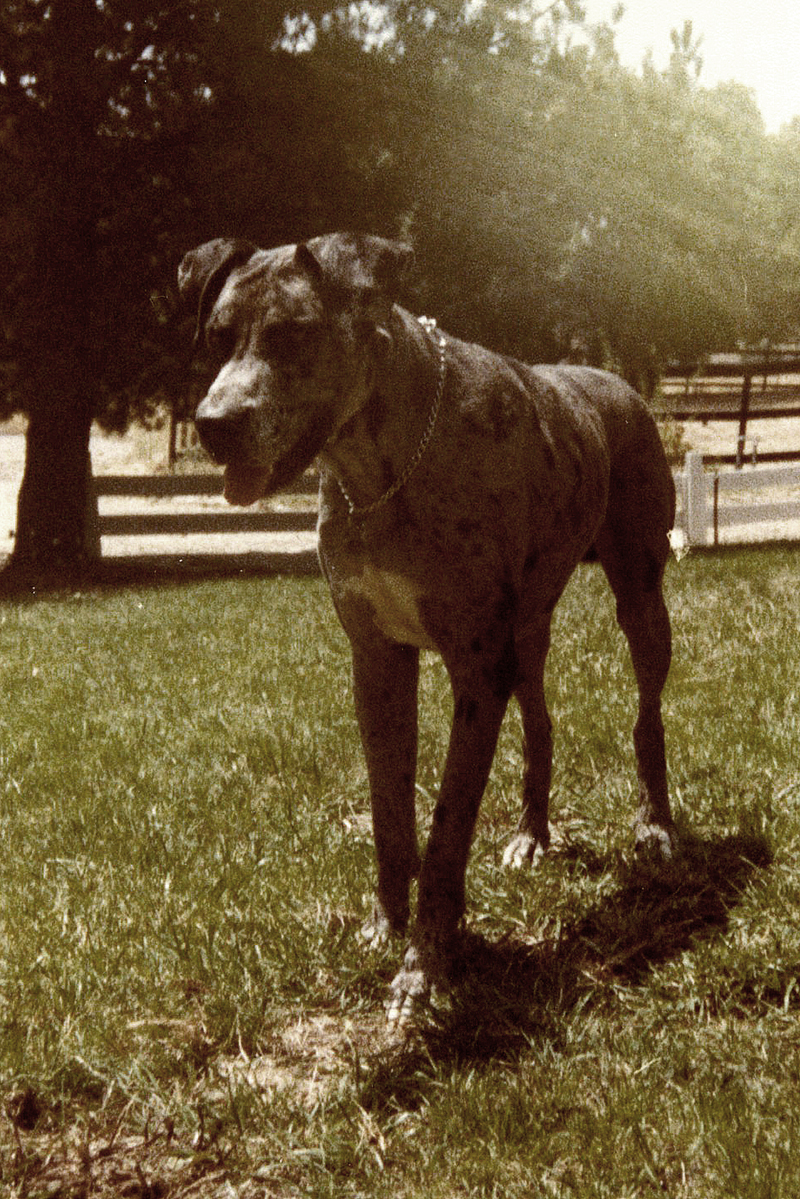
That sweet Sammy smile.

That sweet Sammy smile.

“Until one has loved an animal a part of one’s soul remains un-awakened.” – Anatole France

My Evolution From Dog Owner to Dog Mom (and How I’m Trying to Forgive Myself for Mistakes I’ve Made With Dogs In the Past) – Part One

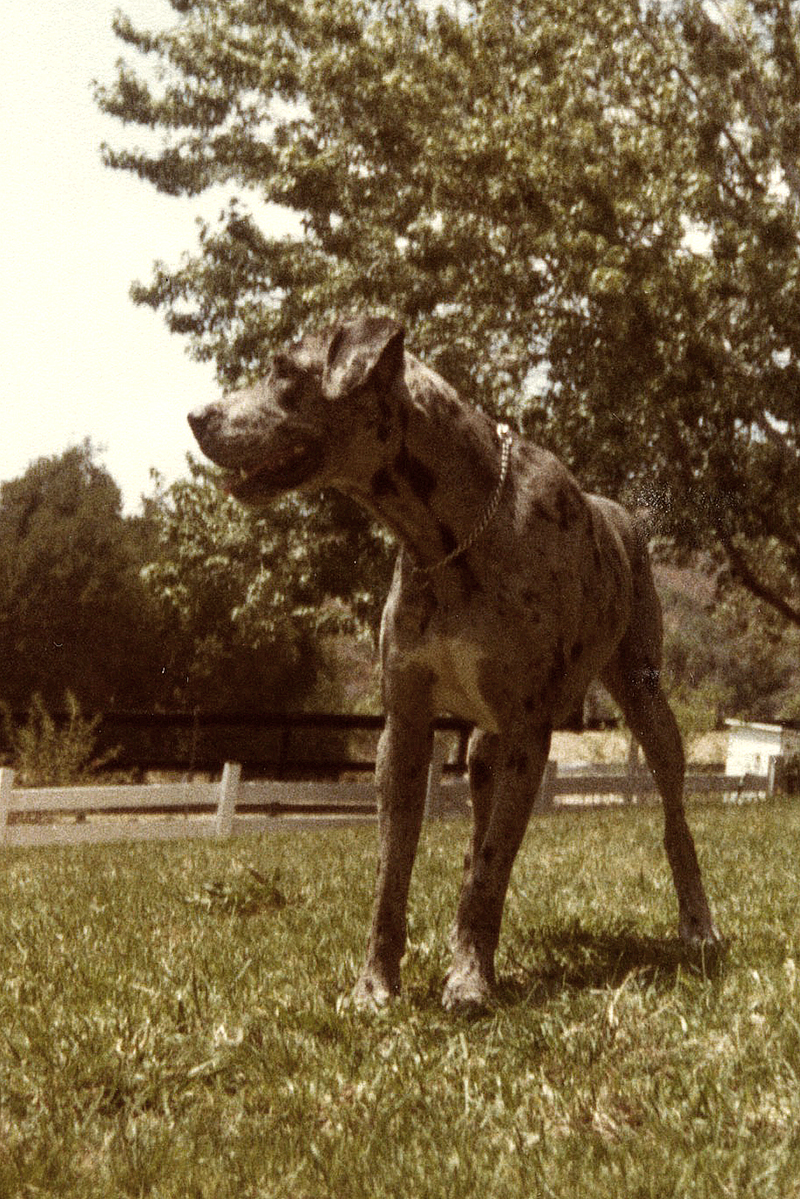
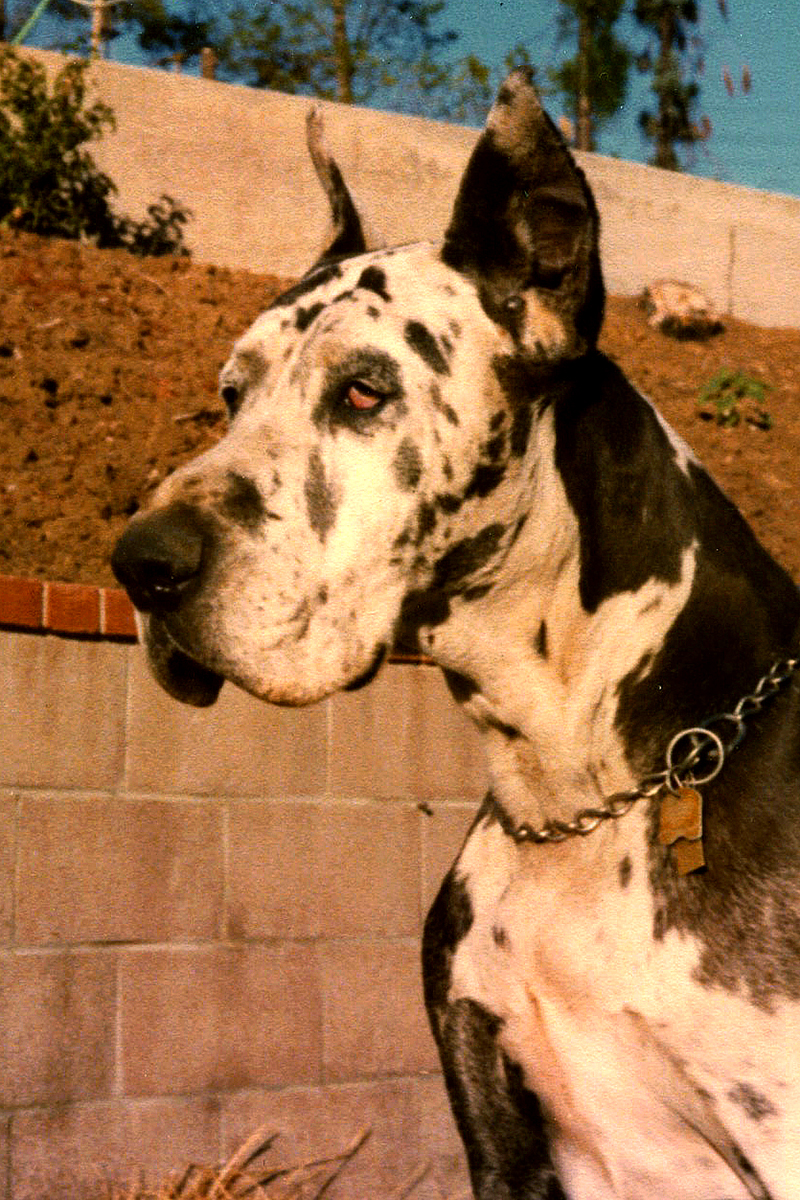
Samson was a blue merle Great Dane and my best trail dog. There wasn’t anywhere my horse and I could go where he wouldn’t follow. The lady who owned the Appaloosa farm down the road gave Sam to my family after our first Great Dane, Harley, had to be put to sleep when his hind end “gave out.” Harley was the funniest, most wonderful dog and only eight years old when he died. I guess that’s why Great Danes have been dubbed “the heartbreak breed,” because they’re such amazing dogs that live terribly short lives. I’m sure there’s more we could have done medically to keep Harley comfortable and extend his life, but in those days it seemed like a lot of people simply “let nature take its course” with their animals. It was the early 80’s, when most pets weren’t viewed as children like they are today. Especially out in the canyon where we lived, a dog got old and it died or you dropped it at the vet and ended its suffering – end of story.

So we got Sammy. I think the breeder wanted to get rid of the young dog because he was too submissive and she preferred more protective Danes that could guard her giant herd of high-bred spotted horses. The ranch had recently gone through an attempted horse-napping, with the thieves rounding up and dumping their dogs miles away so the criminals could return to the scene and steal the choicest horses undisturbed. Sammy had been one of those dogs, and as a result, had been deeply traumatized by the experience. But we were happy to take him off the woman’s hands, as my dad’s heart was broken over losing Harley and wanted very badly to fill the hole our late harlequin had left in his wake. In fact, I don’t think Dad even waited a day between putting Harley down and bringing Sammy home.

Harley the harlequin. My dad never got over losing him.

Harley the harlequin. My dad never got over losing him.

Sam wasn’t the outgoing, silly clown Harley had been, but he was sweet and loving and adjusted to life on our ranch very quickly as if he’d lived with us his whole life. Having grown up with horses and an array of other animals on the Appy farm, Sam was a natural around our four cats, six chickens, one rooster and even our little African pygmy goat, Nadia (in fact, before long Nadia became convinced that Sammy was her new boyfriend – suffice it to say it got “weird” at times). But he was especially comfortable around Temptor, my Appaloosa gelding who had a sly, cranky side he sometimes liked to take out on dogs. As he had with Harley, Temptor took great pleasure in chasing Sam out of his paddock, ears flattened, teeth bared and nostrils flaring as he charged the rapidly retreating canine. But Sam, ever the sweet, gentle subordinate, never seemed to take it personally and would return to my horse’s side again and again, hoping to finally be accepted into his “herd.” Eventually, I think Temptor just gave up and let the dog be.

Dogs love routine, and every morning it was Sam’s job to accompany me to the stable for our daytime feeding ritual. I’d open our kitchen door and there would be Sam, patiently waiting with that big, droopy smile, his long, whip-like tail wagging slowly to and fro. He loved hanging out and sniffing around in the tack room while I measured out Temptor’s breakfast into a bucket, then trailing me to the paddock and standing close as I dumped the contents into my hungry equine’s feed bin. Sam didn’t mind that he always ate last. He was just happy to be a part of it all. He was a ranch dog, plain and simple.

A young Samson.

A young Samson.

Before long the gentle Dane had also memorized my riding routines. He knew the difference between a weekend and a school day, and that when it was summer every day was a riding day. On afternoons after school, when I’d only have an hour to ride before starting my homework, Sam would follow us out to the flat area in our big pasture, where I’d put Temptor through his paces in a large circle. Meanwhile, Sammy would entertain himself by hunting for rabbits or ground squirrels in the long field grass or dozing under a nearby tree. But on weekends or summer days, Sam knew that two hours after Temptor’s feeding we’d be ready to prepare his buddy for a trail ride. Ever the patient gentleman, Sam would lie close by as I curried and brushed Temptor’s brown and white coat to a gleam, head between his giant paws, amber eyes following my every move. But once the saddle was on and I had my boot in the stirrup, the enthusiastic canine was ready to go, leaping to his feet and excited to perform his favorite job – trail guide!

Throughout most of my adolescence, I can’t remember a time when Sam wasn’t there on the trail with Temptor and me. Nothing made him happier than leading the way or picking up the rear as the three of us ventured over miles of fire roads and meandering trails through the sagebrush-covered mountains or down to the beach south of Paradise Cove. Like Temptor, the dog had amazing endurance and could trot or lope alongside us for long stretches of time and distance, maybe stopping here and there to investigate a scent or chase something furry, but otherwise perfectly content to amble along on our rambling adventures.

An older Sammy.

An older Sammy.

On weekends and during the summer months we’d meet up with my girlfriend Catherine and her little brother Eric and their horses for all-day excursions, which usually turned into racing contests. As we’d gallop along like The Wild Bunch, young and crazy and fearless, Sammy would always manage to keep up with us with his long, loping strides, all the while managing to stay clear of all three sets of thundering hooves. Sometimes we’d pack a lunch or head back to Catherine’s ranch for a light meal under the oak trees, Sam lying in the cool grass and waiting for me to toss him a few morsels. He was a good dog and my buddy and I couldn’t imagine going on a ride without him. Then one day he just stopped coming along.

It happened almost overnight, the change in Sammy. I first noticed something was off when I was heading out for a quick afternoon ride after school and noticed Sam wasn’t trotting alongside in his usual place. I turned around in the saddle and saw him heading in the opposite direction, toward home. Confused, I called his name once, then twice, but he just glanced back at me and kept going. When I yelled at him to “come” he started running faster, probably thinking he was in trouble. But whatever the reason for his strange behavior, it wasn’t like him to cut a ride short. When I returned home an hour later, Sam was lying by the kitchen door as if nothing had happened, ears back and tail thumping on the cement as I walked up, perhaps hoping I’d forgiven him. He was seven years old now and his muzzle was almost completely gray. But wasn’t he too young to be slowing down just yet?

Sam, the greatest ranch dog in the world.

Sam, the greatest ranch dog in the world.

Lately, I’d noticed he hadn’t been eating as much and had lost some weight. Still, he’d always been a lanky Dane. The Blue Jays always seemed to be finishing Sam’s food instead of him, making a ruckus as they dive-bombed his food bucket and flew away with giant chunks of kibble in their beaks. At that time gourmet, premium or holistic dog food wasn’t exactly commonplace, or even available, I imagine. Like most dogs at the time, ours ate good ole’ Purina Dog Chow, the kind of cheap kibble I wouldn’t dream of letting my dogs eat now. I can only imagine what was in it – corn, wheat, soy, artificial coloring and preservatives and cheap meat by-products from unknown sources. Sam might as well have been living on junk food. Still, he’d always been a good eater, until recently.

It was only by accident that I noticed the dog’s mouth. Maybe I smelled a foul odor when I knelt down next to him, or maybe as I stroked his face I moved his jowls and caught sight of his teeth, I’m not sure. But I remember doing a double-take and pulling his lips back, exposing teeth coated in thick brown tartar and red, inflamed gums. At 18 years old, I knew nothing about canine dental care and had never heard of anyone having their dog’s teeth cleaned by a vet. I’d noticed Sam’s tartar-stained teeth before, but the situation had obviously grown worse. But like most minor problems our animals had from time to time, from fleas and hot spots to little cuts and abrasions, I figured Sammy’s mouth would just heal up on its own. And though his gums definitely didn’t look right, I simply ignored the issue, figuring it was just a typical condition some dogs developed from time to time. I don’t know why I didn’t say anything to my parents. I wish I had. I wish I’d known enough to put two and two together, that the reason Sam didn’t want to go on rides anymore was due to the raging infection in his gums, which by then was probably destroying his heart. But I had no clue that my dog was showing signs of heart disease, I just thought he was getting old and tired. Three months later, Samson disappeared.

It Takes a Village to Help Animals In Need

When Rachel Meier took a job in Rome, Georgia, it wasn’t long before she suspected that something wasn’t quite right in the neighborhood behind her workplace.

“I’d walk out to my car every day and would hear lots of dogs barking, at least ten different dogs,” Rachel told me. “I didn’t think it was normal, so I got in my car and started driving around and I was like, oh-my-God!”

As a four-year cat rescuer with Angels Among Us Pet Rescue, Rachel has seen her fair share of animal abuse and neglect, but she wasn’t prepared for what she witnessed just footsteps from her job – dozens of skinny, chained dogs with no food, water or shelter in filthy, trash-littered backyards, and tons of thin, scruffy cats wandering loose between the houses and along the streets. With winter just around the corner and temperatures about to drop, Rachel knew she had to do something to help these desperate animals, and fast.

For those of you who have never heard of Rome (not to be confused with the capitol city of Italy), it’s a small, rural city 65 miles northwest of Atlanta with a large working-class population. Twenty percent of its citizens live below the poverty line. And if people aren’t able to provide for themselves, then you can pretty much guarantee they’re not properly caring for their pets. Such was the case in the disadvantaged community Rachel had inadvertently stumbled upon.

Without missing a beat, the young rescuer immediately reached out to one of her volunteer friends, purchased some straw bales and bags of pet food, and began canvasing the neighborhood, knocking on doors and offering supplies to anyone who needed them. Thanks to the two kindhearted women, several dogs and cats had softer places to sleep and full bellies that night. But Rachel knew just one random act of kindness wasn’t going to suffice – there was too much need in this community to walk away now. With visions of all those neglected dogs and cats haunting her thoughts, she went home and started to rally her troops. And thus, the Rome outreach and rescue effort was born.

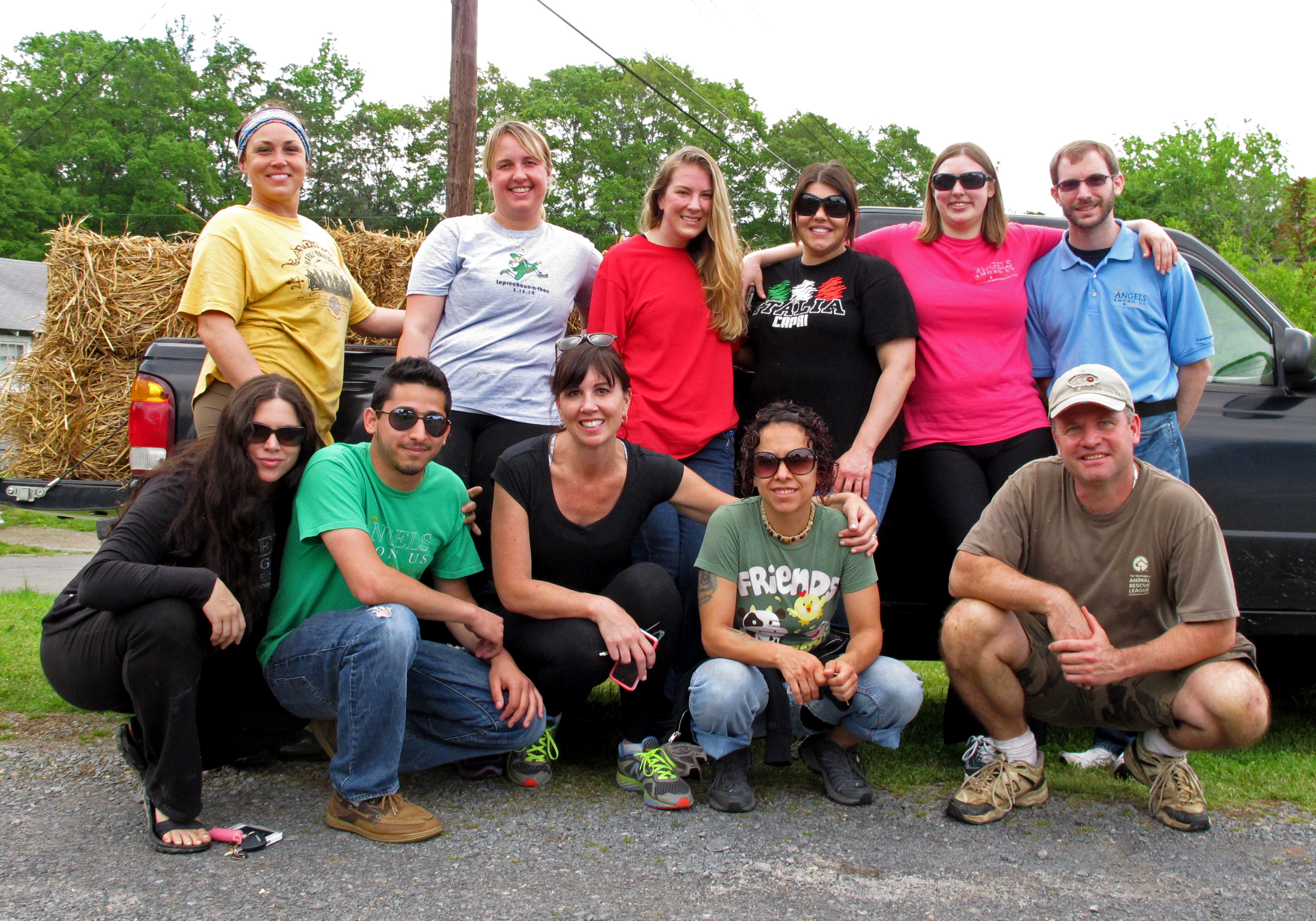
The fifth Rome outreach mission group. From left to right, back row: Meaghan Sopata, Lindsey Kirn, Rachel Meier, Monica Wesolowski, Emily Chason and Jordan Gilchrist; front row: Danielle Kramer, Nick John, Jennifer Naujokas, Lucero Hornedo and Allan Brown.

The fifth Rome outreach mission group. From left to right, back row: Meaghan Sopata, Lindsey Kirn, Rachel Meier, Monica Wesolowski, Emily Chason and Jordan Gilchrist; front row: Danielle Kramer, Nick John, Jennifer Naujokas, Lucero Hornedo and Allan Brown.

By the time Rachel was ready to make her second and third visits to the neighborhood, fellow AAU volunteers Danielle Kramer, Monica Wesolowski and Jennifer Naujokas were on board. And once they witnessed the desperate state of the animals for themselves they, too, became deeply committed to the relief mission.

But in order to pay for all the pet supplies the impoverished community desperately needed, including food, doghouses, straw bales, flea, tick and heartworm preventative, toys and other accessories, the group had to find funding. And that’s where the magic of social media came in.

“We started posting on Facebook among our circle of Angels volunteers, emailing and calling folks and contacting local (pet supply) stores,” Danielle explained. “We asked Petsmart and Petco for expired food and began working with two Tractor Supply Co stores in Canton, which were amazing. They gave us a huge box of toys, cedar shavings, flea and tick treatments and de-wormers, just tons of stuff. We got a lot of donations from the Angels volunteers and started stockpiling supplies.”

Once word spread of the Rome effort, other Angels volunteers jumped on board to pitch in, and before long the group grew from the four core members to a dozen volunteers.

“This is the fifth trip where all of us have been together,” Danielle said. “So far I think we’ve rescued about 40 dogs from the area and helped about 100 animals. We’re trying to get more and more organized and we’ve learned a lot through trial and error, but no matter what, if we’ve helped one (animal), we’ve done well.”

Another lonely, chained and attention-starved pit bull in the more “sketchy” part of the neighborhood. His owner never bothered to come out of his house to see what we were doing. The poor dog cried as we left.

Another lonely, chained and attention-starved pit bull in the more “sketchy” part of the neighborhood. His owner never bothered to come out of his house to see what we were doing. The poor dog cried as we left.

As a long-time admirer of AAU and all the amazing work they do to rescue, rehabilitate and rehome dogs and cats in the Atlanta area, I jumped at the chance to join the group and experience the outreach effort for myself. It was inspiring to be in the company of such generous, compassionate individuals who love animals as much as I do, people more than willing to get up early on a weekend and devote an entire day to helping pets in need.

So last Sunday morning I found myself gathered with the group at our meeting place in the Rome Home Depot parking lot, some of us sipping coffee, all of us prepared to get dirty. It’s obvious these people have developed a close affinity, as there were plenty of smiles, laughter and hugs to be had as everyone greeted each other. After briefly discussing our itinerary, which included visiting and dropping off supplies at approximately 15-20 homes in three neighborhoods, we loaded up on straw bales and caravanned toward our first destination, our five trucks and SUVs packed to the gills with food and supplies. From the moment we arrived at the first neighborhood, it became glaringly obvious to me why this outreach mission needs to exist.

In most disadvantaged communities here in the south, I imagine that most animals live pretty much the same way as they do in the low-income neighborhoods of Rome. While there were a few exceptions, the majority of the dogs we visited lived on chains, often in dirty or overgrown backyards where they received very little human interaction. Forget about going on car rides to the dog park, sleeping on comfy couches or being part of a family – most of these dogs had nothing except for a dilapidated, makeshift dog house, if they were lucky. Fencing is expensive, and since many of the people don’t allow their dogs indoors – especially the large dogs – these animals are simply left outside to brave the elements and “guard” their owners’ property.

While most of the dogs were initially defensive when we approached (being tethered makes dogs more aggressive and protective of their space), once they realized we were there to give them treats, food and attention, the majority of them melted into friendly puddles of wiggling, wagging, squealing love, simply starving for attention and drinking up every ounce of it.

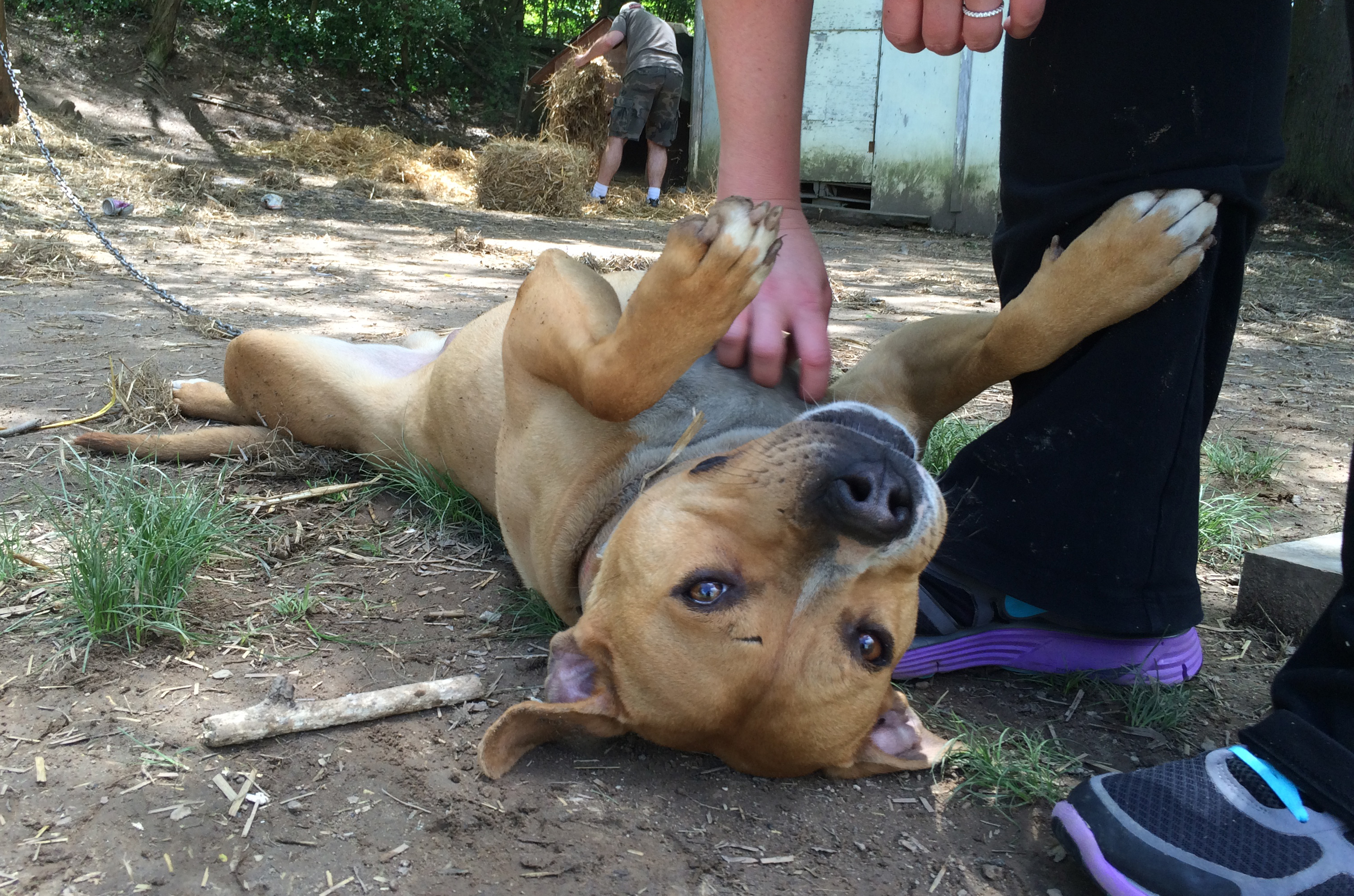
Allan and a sweet blue pittie who was so excited to see us he almost knocked us over!

Allan and a sweet blue pittie who was so excited to see us he almost knocked us over!

“This effort is so important to me because I’ve seen a change in these animals,” Rachel told me. “I see in their eyes how appreciative they are and how much even the small things we do for them mean. I’ve seen ‘ferocious’ dogs turn into playful puppies and sad, frightened puppies turn into happy, bouncing, playful things. I believe every animal has a soul and every creature deserves love and happiness, so I want to bring it to these poor souls in any way that I can. They deserve better than what they were dealt and if I can’t physically remove them from the situation and place them in a better one, then I at least want to better their lives in some way.”

As we slowly drove down the streets, stopping at homes and meeting with pet owners the core group had established relationships with, people came out of their small, rundown homes to greet us, some of them with wide-eyed children in tow. Most of the pet owners asked for dog or cat food and appeared genuinely appreciative for the help, some smiling with gap-toothed grins, their weathered faces glowing like kids on Christmas morning.

Meanwhile, Rachel moved about with laser-like focus, calling out to us for different supplies, making sure every pet household got what they needed and making note of what she’d need to bring next time. Danielle and Jennifer appeared to be more of the diplomats of the group, engaging with the people and gently advising them about proper pet care when it seemed appropriate to do so, all without sounding judgmental or superior. I was so impressed with their patience and restraint.

“A lot of these people are very receptive (to the information we give them) but you do have to be very careful in how you educate them because we are guests in their neighborhood and it’s easy to offend anybody,” Danielle told me. “No matter what your personal emotions are about something, you have to speak to them with respect. If they don’t want us in this neighborhood I guarantee you there will be folks who won’t allow us here.”

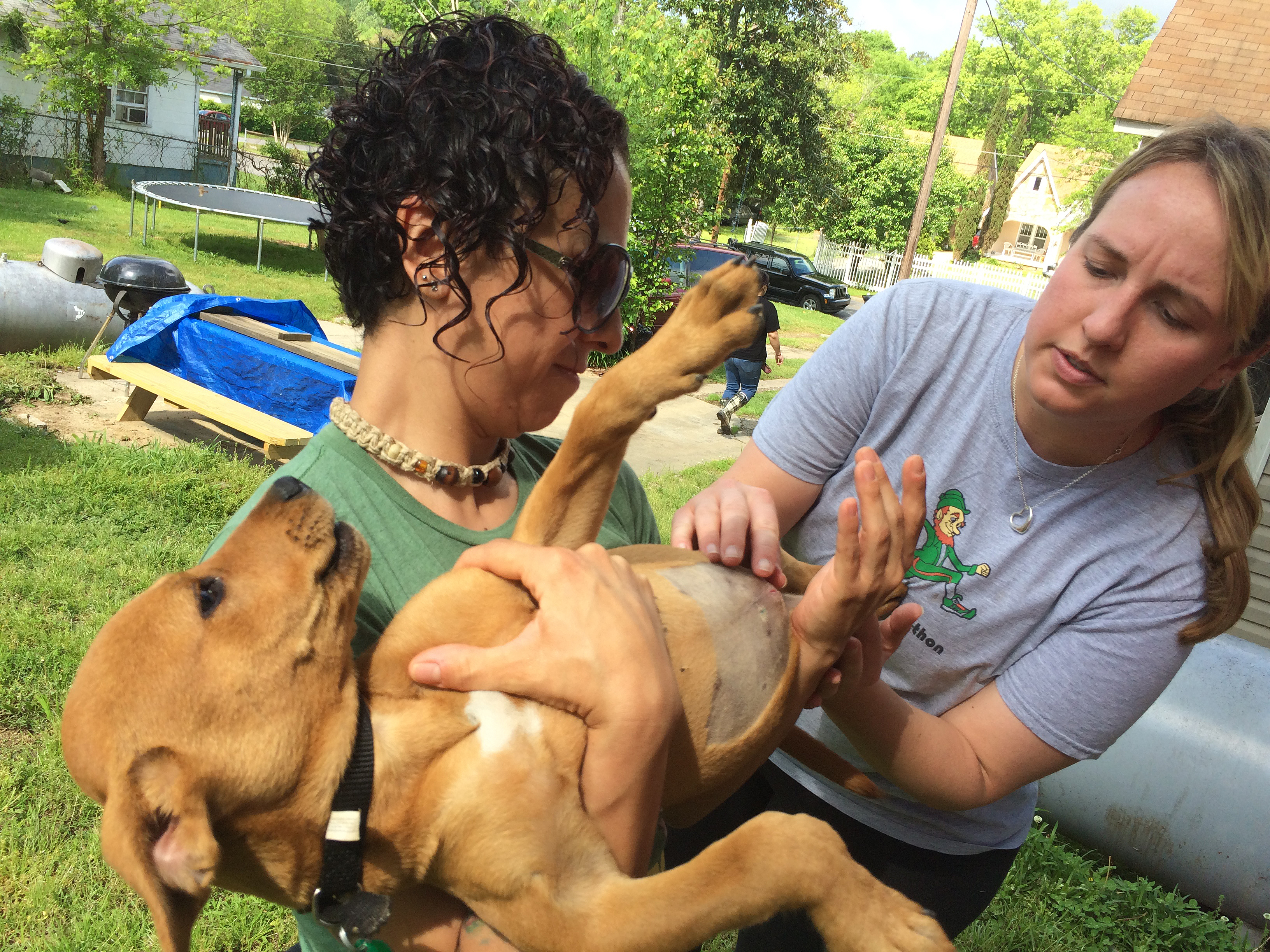
Lucero and Lindsey checking out a puppy with an open spay suture - at least her owner had her spayed. Too bad she already had her outside on a chain, though.

Lucero and Lindsey checking out a puppy with an open spay suture – at least her owner had her spayed. Too bad she already had her outside on a chain, though.

As the morning turned to mid-day, it seemed to me like every family we visited either had a tethered, sick, injured, pregnant or nursing animal. Even though low-cost spay and neuter is indeed available in many communities here in Georgia, few of these people seemed to know about these services or simply hadn’t taken advantage of them. As a result, some homes we visited were simply overwhelmed with too many animals, including one house with two female dogs that had both given birth a couple of weeks apart, resulting in 13 canines under one roof. Another family had been living with 15 small dogs in a tiny, 800-square-foot house and were relieved at the concept of surrendering a few of them to us. When the woman became teary-eyed at the reality of parting with “her babies,” we assured her they would all go to great homes.

Due to the fact that AAU now has upwards of 800 animals in its system, the rescue asks that volunteers make every effort to secure a foster home before accepting an owner surrender so the animal has a safe and secure place to land. While the group tends to rely mostly on AAU for taking any surrendered pets from the community, it also works with a couple of other rescues, including Road Trip Home Animal Rescue, which transports dogs out of Georgia and into regions with higher demand for rescue pets, and Furkids, another amazing local organization that focuses on rescuing cats and small dogs.

Once the woman agreed to surrender five of her 15 dogs, Jennifer and Danielle began a flurry of text messages with their foster network, trying to find placement for the scruffy terrier mixes. Mission accomplished, we loaded the pups in crates and packed them in the back of Jennifer’s SUV, quietly jubilant that these lucky dogs were now headed for much better prospects.

The rest of the day became a blur of more desperate dogs on chains, more litters of puppies or dogs with puppies on the way, cats running around everywhere, none of them fixed, one of them badly injured. One skinny, chewed-up looking tomcat ran up to me as I took a break by Danielle’s truck, crying beseechingly as if he knew I was there to help him. I quickly opened a can of cat food and sat by the skinny feline as he enjoyed his meal, yellow eyes glazed over in contentment. He reminded me of a tiger-striped cat I had had as a child and a wave of melancholy washed over me.

The thin and battle-scarred tom cat enjoying his meal.

The thin and battle-scarred tom cat enjoying his meal.

I must admit it was challenging to not feel animosity toward the people for the neglect we continued to witness, house after house, street after street. But once you started talking to them and looking into their eyes, you realized that most of them were actually kind people who cared about their pets, they just didn’t know any better or simply couldn’t afford to take better care of them.

“A lot of the way these people treat their animals comes out of ignorance – nobody ever taught them how to properly care for an animal,” Danielle explained as we drove to the next street. “Some of them think they’re doing right by them, like, ‘yes, my dog is chained outside, but I feed him.’ They simply don’t understand.”

It makes sense that if you don’t have enough money to take care of yourself and your family, you’re probably not going to spend what little you do have on veterinary care or premium food for your dog. So if your dog gets sick, pregnant or goes without a meal, that’s just how it is, and the animal has to live (or die) with its lot in life. Yes, maybe I am different in that I have always put my animals first, and if I couldn’t afford to properly care for a pet I wouldn’t have one in the first place, but not everyone thinks that way. And therein lies the emotional and mental torture of rescue – enduring the ignorance of human beings and the intentional or unintentional cruelty they inflict upon their pets.

Looking around, watching all these wonderful volunteers bedding down new doghouses with straw, petting dirty, neglected dogs and spooning cans of cat food into bowls for hoards of hungry kitties, I had to wonder, when does this end? As long as these people are living in poverty, so will their animals. So is it realistic for Rachel and her group to just keep coming out here month after month, year after year, and if so, is that really going to solve anything in the long run? Wasn’t this mission like putting a Band-aid over a much deeper, larger wound?

This desperate little Chihuahua couldn’t stop barking with excitement when we arrived. A dog like this belongs on someone’s lap, not on a tether.

This desperate little Chihuahua couldn’t stop barking with excitement when we arrived. A dog like this belongs on someone’s lap, not on a tether.

“I would like to see tethering laws as well as laws for spaying and neutering to end the vicious cycle of overpopulation, euthanasia, and homelessness, but until that happens I will continue to help,” Rachel said. “I have an amazing group of people who help me, from monetary, food, toy and medication donations to physically going out here and ‘getting dirty.’ I can’t do it without this group and so as long as I have their support and can physically and mentally do this, I will.”

Since irresponsible pet ownership and indiscriminate breeding are the main culprits of our pet overpopulation problem, it is indeed spay and neuter (and in my opinion, mandatory spay and neuter) that will ultimately solve this crisis. And that’s why one of the main objectives of the Rome group is to help the community stop the vicious cycle of litter after litter of puppies and kittens being born into poverty and neglect.

“We have approximately 20 or so dogs that the owners would like to have spayed and neutered – that is huge!” Jennifer exclaimed. “This is the first time we’ve heard such glorious of words of wanting to stop the cycle in this community. We are going to work very hard to find a spay and neuter vehicle to come out here in a few weeks.”

As the day wound to a close, I have to admit I was feeling somewhat zombie-like. How many more sad, lonely pit bulls would I see chained in dirty backyards, leaping excitedly at the prospect of any shred of loving attention from a human being? I wanted to take every one of them home with me, especially a blonde and white little girl whose soulful eyes pleaded with me as if to say, “please get me out of here.” It was torture to walk away from her. I haven’t been able to get her out of my head since.

This is the sweet blonde and white pit bull who touched me deeply. She’d obviously been bred numerous times.

This is the sweet blonde and white pit bull who touched me deeply. She’d obviously been bred numerous times.

“Not everybody can do this,” Danielle told me frankly as we drove away. “You have to be emotionally able to handle what you’re going to see and you have to be mentally and emotionally prepared for it. I would welcome anybody who would want to come out and do this but when people ask me about it I’m very honest with them. I tell them, ‘this is what you’re going to see, this is what it’s going to be like and it’s not the safest environment.’ It’s a great feeling to be helping and bringing supplies, and even though you can’t take that dog you’re making its life as comfortable as you can. But the hardest part is when you’ve got to walk away and you see those eyes watching you and they’re looking at you like, ‘come back!’ That’s the part that can haunt you.”

As someone who has always had an affinity for animals and has dedicated her life to spreading awareness about the cruelties non-human species face, I am very grateful to have had such an experience with an incredible group of fellow animal lovers. I walked away with a better perspective and understanding for what frontline rescuers are up against in this region, especially in disadvantaged communities where animal husbandry appears to be two or three decades behind the times. Ignorance begets ignorance, and while many of these people may mean well, they are simply victims of poverty and poor education, plain and simple. Surely these humans deserve our compassion, too.

But ultimately, stamping out animal neglect in our country, whether in rural southern communities or elsewhere, will ultimately come down to enacting stronger anti-cruelty legislation. No community should allow the indefinite tethering of a dog, under any circumstances. But until practices like this are outlawed and people are punished, their behaviors won’t change and the changes won’t be lasting.

“The biggest thing for Rome right now would be anti-tethering laws because all of these dogs are on chains, so that would eliminate that,” said Danielle. “Either you bring your animal inside or you don’t have one or you’re going to keep getting cited and fined, which a lot of these folks can’t afford. That’s where it will start – they’ll have to be held accountable for how they treat their animals. So it’s baby steps toward a bigger picture, that’s what this mission is.”

But until local lawmakers become inspired to enact tougher laws to protect the interests of animals, people like Rachel and her passionate group of kindhearted volunteers will continue to pick up the pieces, either removing animals from the community or helping the remaining ones live more comfortable lives. It may seem like one drop of water in a huge ocean of need, but even small steps can make a difference, even if it’s one pet and one pet owner at a time.

According to the family of this Australian shepherd/cattle dog mix, once the puppy is big enough he’ll be living outside (on a chain, no less) because he’s “too active.”

According to the family of this Australian shepherd/cattle dog mix, once the puppy is big enough he’ll be living outside (on a chain, no less) because he’s “too active.”

Although I highly recommend participating in a community outreach mission with a local rescue group, it’s definitely not for everyone. Improving the lives of animals doesn’t necessarily mean you have to “get dirty” or even donate money. Here are some other ways you can make a difference:

  • Become a foster parent: Rescues are teaming with animals who need safe, loving and secure foster homes where they can be cared for, socialized and nurtured until they find their perfect forever homes. Fostering animals is so rewarding and while it can be sad to say goodbye, you can rest assured knowing you’ve played a crucial role in helping that animal along its path toward the amazing life it deserves.
  • Get up and do something: Anybody can sit back, judge and point fingers. If you don’t like the way animals are treated and you want to see a change, become the change. Write letters to your local legislators, start an online petition, volunteer at your local shelter, donate supplies to a rescue organization or spread the word about animal welfare on social media.
  • Be kind and help out: If you notice someone neglecting their dog, instead of judging or quietly despising them, ask the person if they need a bag of dog food, a $5 bail of straw or a doghouse. Remember, it’s about helping that animal, not whether you like that person or not. And who knows, maybe that individual could use your help, too? No random act of kindness is too small, so just do it.

“Animals don’t have a voice, we are there only voice,” Rachel said. “You can’t just think, ‘someone else will help,’ you have to help and in any way you can. Speak out if you see abuse. Start an outreach program if your community needs it – it’s easier than you think. There are people everywhere who are willing to help, and the difference you will make for the animals will be more than you could ever imagine.”

If you’d like to help this amazing group continue their mission helping the disadvantaged animals of Rome, please go to the group’s GoFundMe page – every little bit helps!

“Never doubt that a small group of thoughtful, committed citizens can change the world; indeed, it’s the only thing that ever has.” – Margaret Mead